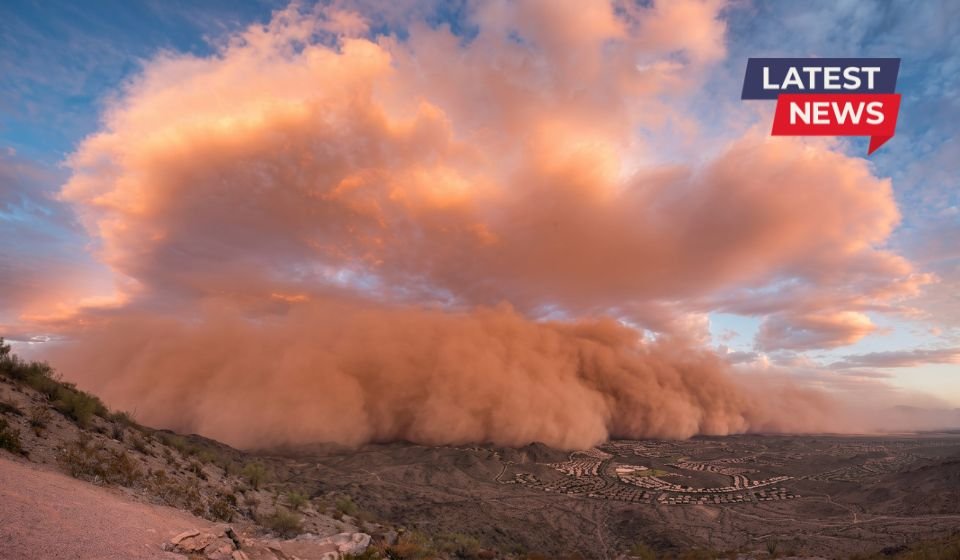

Phoenix, Arizona, long recognized as one of the world’s most active locations for massive dust storms known as haboobs, is entering a new era of weather monitoring with the launch of the Phoenix Dust Storm (PHX-DUST) Scale. The new system has been developed by researchers at Arizona State University (ASU) in partnership with the National Weather Service (NWS), the Arizona Department of Environmental Quality (ADEQ), and numerous scientific organizations to provide a standardized way of measuring the intensity of dust storms.
For decades, meteorologists have categorized hurricanes, tornadoes, and winter storms using established rating systems. Dust storms, despite posing significant threats to life, transportation, and public health, lacked a similar standardized classification. The PHX-DUST Scale aims to fill that gap by assigning storms a Category 1 through Category 5 rating based on measurable scientific data rather than subjective observations.
Why Phoenix Is Considered a Haboob Hotbed
Geography Creates Ideal Conditions
The Phoenix metropolitan area sits within Arizona’s Sonoran Desert, where dry soil, sparse vegetation, and intense summer heat combine to create ideal conditions for powerful dust storms.
During the annual North American Monsoon season, thunderstorms frequently develop across southern and central Arizona. When these storms collapse, they produce powerful downdrafts that spread outward across the desert floor. The resulting gust fronts lift enormous amounts of loose dust into the atmosphere, creating towering walls of dust that can stretch for dozens of miles.
Meteorologists note that Phoenix experiences some of the largest and most photographed haboobs in North America, making it an ideal location to develop a formal dust storm classification system.
What Is a Haboob?
A haboob is an intense dust storm generated by strong thunderstorm outflow winds. The word originates from the Arabic word “habb,” meaning “to blow.”
Unlike ordinary blowing dust, haboobs often appear as enormous moving walls of dust that can rise thousands of feet into the sky while rapidly advancing across the landscape.
Some Arizona haboobs have reduced visibility to near zero within minutes and produced wind gusts exceeding 60 mph, creating dangerous driving conditions and widespread transportation disruptions.
How the New PHX-DUST Scale Works
A Five-Category System
The newly introduced PHX-DUST Scale ranks storms from Category 1 to Category 5 based on multiple measurable characteristics rather than relying on a single factor.
Scientists evaluate each storm using:
- Wind speed
- PM10 particulate concentration (large airborne dust particles)
- Geographic size
- Storm duration
- Visibility impacts
- Overall severity
Instead of simply describing a storm as “large” or “severe,” meteorologists can now assign an official category similar to hurricane ratings.
Network of 22 Monitoring Sensors
One of the key innovations behind the new scale is an extensive network of 22 monitoring stations positioned across the Phoenix metropolitan area.
These sensors continuously collect atmospheric information, allowing researchers to accurately determine dust concentrations and storm behavior in real time.
The collected information helps scientists compare storms objectively and improve forecasting models for future monsoon seasons.
Multiple Organizations Collaborated on the Project
The PHX-DUST Scale was not developed by a single institution.
Instead, it represents a collaborative effort involving:
Arizona State University
ASU researchers led the scientific development of the ranking methodology, with climatologist Dr. Randy Cerveny playing a prominent role in explaining and promoting the system.
National Weather Service
Meteorologists contributed operational weather expertise and forecasting support.
Arizona Department of Environmental Quality
ADEQ provided air-quality monitoring data essential for measuring airborne particulate concentrations.
Additional Scientific Partners
More than a dozen organizations participated in validating and refining the system before its public rollout, ensuring that it reflects both atmospheric science and public safety needs.
Historic Dust Storms Helped Shape the Scale
Researchers evaluated numerous historical Phoenix dust storms while designing the ranking system.
One of the most famous examples remains the massive July 5, 2011 haboob that engulfed much of the Phoenix metropolitan area. The storm produced an enormous wall of dust visible from space and remains one of only three storms over the past 16 years considered to meet the highest Category 5 threshold under the new system.
By comparison, the large dust storm that swept through Phoenix in August 2025 would receive a Category 2 designation because of its widespread coverage, strong winds, but relatively shorter duration and lower overall severity than the most extreme historical events.
Why a Standardized Rating Matters
Better Public Communication
Officials believe that assigning numbered categories will make it easier for residents to understand the seriousness of approaching dust storms.
Rather than hearing only a generic dust storm warning, residents may better appreciate the expected impacts when informed that a storm is Category 4 or Category 5.
This mirrors the way hurricane categories immediately communicate expected severity to the public.
Improved Emergency Planning
Emergency managers can use the standardized ratings to prepare road closures, public alerts, and emergency response plans more effectively.
Transportation agencies, airports, and first responders can also better anticipate operational impacts based on the expected storm category.
Major Hazards Associated With Haboobs
Dangerous Driving Conditions
Perhaps the greatest danger posed by haboobs is the sudden collapse in visibility.
Motorists may go from clear skies to complete darkness within seconds as thick dust envelopes highways.
Arizona transportation officials continue to promote the “Pull Aside, Stay Alive” safety campaign, urging drivers to safely exit the roadway, turn off their lights, and remain inside their vehicles until visibility improves.
Health Risks
Dust storms carry enormous quantities of fine particles capable of irritating the eyes, nose, throat, and lungs.
Individuals with asthma, chronic obstructive pulmonary disease (COPD), allergies, or other respiratory illnesses face elevated risks during major dust events.
Medical experts have noted increases in emergency room visits following significant haboobs, while airborne dust can also contribute to Valley Fever exposure in susceptible regions of Arizona.
Aviation Disruptions
Large haboobs frequently reduce visibility at Phoenix Sky Harbor International Airport, occasionally forcing temporary ground stops or flight delays until conditions improve.
Air traffic controllers must closely monitor visibility and wind conditions during significant dust events to maintain flight safety.
The 2026 Arizona Monsoon Outlook
Meteorologists expect the 2026 Arizona monsoon season to be more active than recent years.
Climate forecasts indicate above-average temperatures combined with favorable moisture patterns that could produce more frequent thunderstorms across the state.
While increased rainfall is generally beneficial, it also raises the likelihood of powerful thunderstorm outflows capable of generating additional haboobs.
Researchers believe the new PHX-DUST Scale will be especially valuable during what could become one of the busier monsoon seasons in recent years.
Looking Ahead
The introduction of the Phoenix Dust Storm Scale represents a significant advancement in weather science and public safety. By combining data from a sophisticated network of monitoring stations with standardized severity ratings, researchers hope to improve forecasting, increase public awareness, and reduce the dangers associated with Arizona’s iconic dust storms.
As Phoenix continues to experience some of North America’s most dramatic haboobs, officials believe the new classification system will help residents, travelers, emergency managers, and meteorologists better understand and prepare for these powerful natural events during every monsoon season.