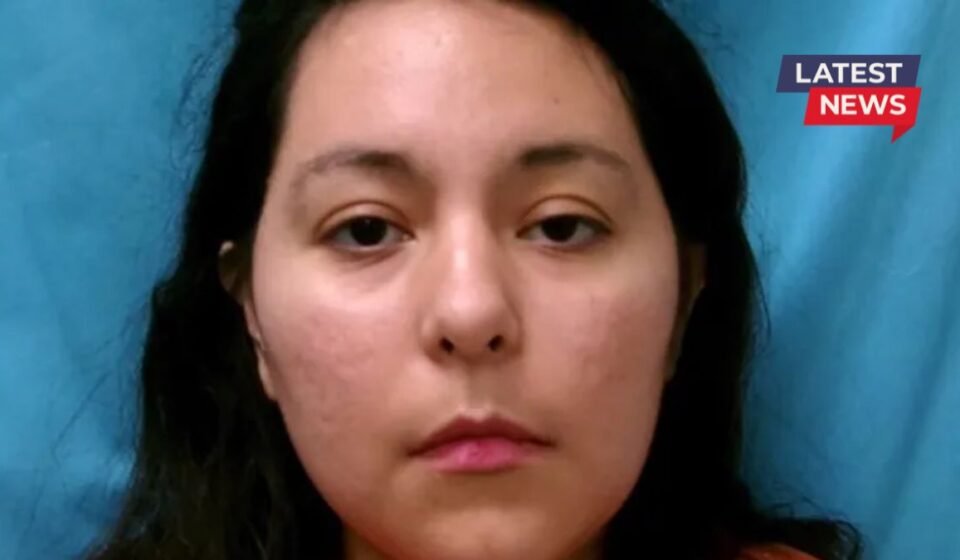
Mom ‘Intentionally’ Left Toddler in Hot Car Because She Couldn’t Find Childcare, Then Stopped at McDonald’s On Way to Hospital

The intersection of parental desperation and unfathomable negligence took a dark, criminal turn in North Texas, culminating in a tragedy that shocked the nation. On June 19, 2026, a Collin County jury found 27-year-old Vanessa Esquivel guilty of first-degree murder following the horrific death of her 15-month-old son, who was left inside a sweltering vehicle for hours.
The case against Esquivel exposed a deeply disturbing timeline. Driven by an inability to find adequate childcare for her shift as a massage therapist, she made the conscious decision to leave her toddler strapped into his car seat in a hot parking lot. Even more staggering to investigators and the public alike was her behavior after discovering her son was unresponsive: rather than rushing immediately to save his life, Esquivel actively attempted to construct an alibi, even stopping at a McDonald’s drive-thru for fast food while her dying child sat in the vehicle.
The Fatal Decision: Caught Between a Rock and a Hard Place
The chain of events began on August 16, 2025, in Frisco, Texas. Esquivel was scheduled to work a afternoon shift from approximately 1:45 p.m. to 4:15 p.m. at the Hand & Stone Massage and Facial Spa. According to court records and investigative affidavits, Esquivel had struggled to secure childcare for her 15-month-old son that day.
Faced with the choice of missing her shift or taking her son with her, Esquivel drove to her workplace with the toddler. Upon arriving at the spa’s parking lot, she decided to leave the boy inside the vehicle while she went indoors to service two clients.
Esquivel would later claim in a recorded phone conversation that she believed she was mitigating the danger by leaving the vehicle’s engine and air conditioning running. However, as outdoor temperatures in Frisco soared to a blistering 95°F that afternoon, the interior of a stationary vehicle can rapidly transform into a greenhouse, raising temperatures to lethal levels within minutes if the mechanical cooling systems fail or are insufficient. Ultimately, the toddler was subjected to prolonged, catastrophic heat exposure for nearly three hours while his mother remained inside the business.
The Callous Timeline: McDonald’s and the Fabricated Alibi
When Esquivel returned to her car after 4:15 p.m., she discovered her son was unresponsive. At this critical juncture, when every second mattered to save the child’s life, investigators revealed that Esquivel’s primary focus shifted toward self-preservation and covering her tracks.
Instead of calling 911 or driving directly to the nearest emergency room, Esquivel drove to a nearby McDonald’s. She pulled through the drive-thru and ordered fast food, all while her son lay dying or already deceased in his car seat. According to prosecutors, this detour was a calculated attempt to break up her timeline and create a narrative that she had been casually running errands with her son all afternoon, rather than leaving him abandoned outside her workplace.
It was not until approximately 5:30 p.m.—over an hour after leaving her shift—that Esquivel finally arrived at the emergency room at Medical City Plano.
The ER Arrival and Immediate Suspicions
Upon entering the hospital, Esquivel presented a highly composed and fabricated story to medical personnel and arriving Plano police officers. She stated that her toddler simply “did not seem to be feeling well.” She claimed that she had been driving him around in her car all day because the air conditioning in her vehicle was broken, attributing his lethargy to the broken AC unit while asserting they had been together every moment.
The medical reality completely shattered her story. ER physicians determined that the 15-month-old boy was already dead upon arrival. Furthermore, clinical measurements revealed that the child’s internal core body temperature was over 106°F, a definitive indication of severe, prolonged hyperthermia resulting from being trapped in an unventilated, high-heat environment.
A sharp-eyed Plano police officer noticed a glaring detail that immediately compromised Esquivel’s story: she was still wearing her corporate Hand & Stone Massage and Facial Spa uniform. When directly questioned by officers at the hospital if she had gone to work that day, Esquivel repeatedly and adamantly denied it, insisting she had not stepped foot near her job.
Unraveling the Cover-Up: The Recorded Spa Call
The Frisco Police Department, coordinating closely with Plano authorities, launched an immediate investigation into Esquivel’s timeline. Detectives contacted the management of the Hand & Stone Massage and Facial Spa, who verified that Esquivel had indeed clocked in and worked her entire shift that afternoon. Coworkers confirmed that she stayed inside the building the entire time and never once walked out to check on her vehicle.
The most damning piece of evidence, which firmly solidified the first-degree murder charge, came from the spa’s own internal communication systems. On August 17, 2025—the very day after her son’s death—Esquivel placed a phone call to a coworker at the spa. Unbeknownst to her, the spa’s business lines automatically recorded all incoming and outgoing calls.
During the recorded conversation, a panicked Esquivel confessed to the coworker that her son had passed away and explicitly admitted that the tragedy was her fault. She stated that she had been “between a rock and a hard place” due to the lack of childcare and admitted to leaving the boy in the parking lot. Crucially, Esquivel begged her coworker to keep the conversation strictly confidential, instructing her “not to leak” the phone call because the police were actively investigating her.
Legal Consequences and Sentencing
The autopsy report formally concluded that the toddler’s cause of death was prolonged exposure to extreme heat, and the manner of death was ruled a homicide. Armed with the autopsy findings, the business records, the McDonald’s receipt, and the devastating recorded audio confession, Texas prosecutors bypassed lesser charges of manslaughter or child endangerment, opting instead to try Esquivel for first-degree felony murder.
During the trial in June 2026, prosecutors painted a picture of a mother who prioritized her employment and subsequent cover-up over the life of her vulnerable child. While the defense attempted to highlight the immense systemic pressures and desperation associated with a sudden lack of childcare, the prosecution successfully argued that her actions after the fact—stopping for fast food and lying repeatedly to doctors and police—demonstrated a conscious disregard for her son’s life.
On June 19, 2026, the Collin County jury returned a guilty verdict. On July 6, 2026, Vanessa Esquivel was formally sentenced to 25 years in state prison.
The Broader Context of Hot Car Tragedies
This case highlights a grim and persistent public safety issue. According to vehicular hyperthermia data, an average of 38 children die in hot cars every year in the United States. While the vast majority of these incidents are classified as tragic accidents resulting from a parent temporarily forgetting a sleeping child in the backseat, a small and disturbing percentage involve intentional abandonment due to a lack of childcare options or extreme parental negligence.
The medical science behind these fatalities underscores just how rapidly a vehicle becomes dangerous:
- The Greenhouse Effect: Even on a relatively mild 70°F day, the internal temperature of a car can reach 110°F in less than half an hour. On a 95°F day, like the one in Frisco, internal temperatures can easily exceed 130°F to 140°F.
- Child Vulnerability: A child’s respiratory and thermoregulatory systems are not fully developed. A child’s core body temperature rises three to five times faster than an adult’s, making them highly susceptible to heatstroke and organ failure within a very short window of time.
- The Fallacy of Running AC: Leaving a vehicle idling with the air conditioning on is not a guaranteed safeguard. Mechanical failures, shifting gears, or systemic automatic shut-offs can cause the cooling system to fail instantly, trapping a child in an airtight box without moving air.
The tragedy of Vanessa Esquivel’s son stands as a stark reminder of the absolute lethality of hot vehicles, the critical societal crisis surrounding accessible childcare, and the severe criminal liabilities that follow when desperation turns into fatal neglect.