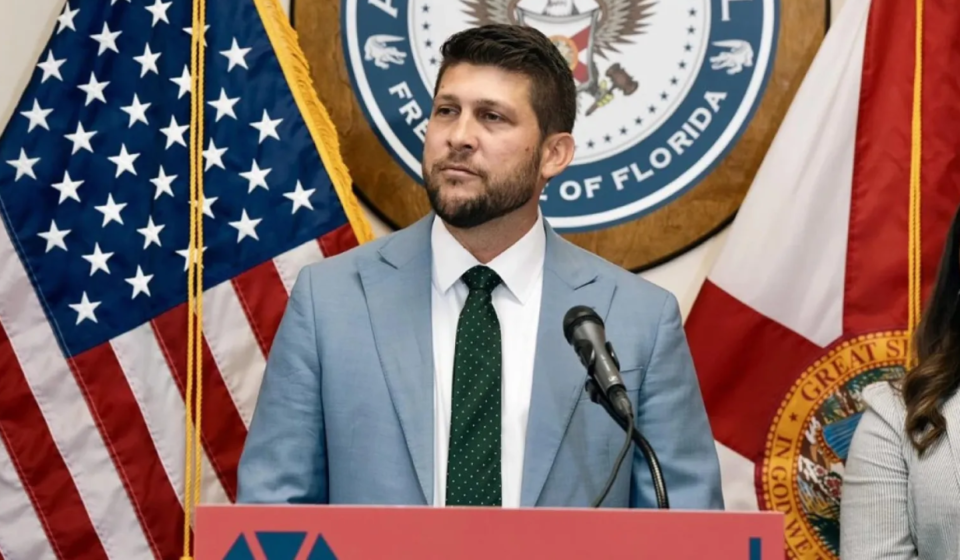

Florida Attorney General officials have announced criminal charges in connection with an alleged retail fraud operation that investigators say used fake rug return transactions to steal as much as $300,000 from businesses. According to state authorities, the scheme involved fraudulent refunds and manipulated return records that allowed suspects to obtain money and merchandise through deceptive practices.
The investigation was conducted by state law enforcement agencies working alongside prosecutors to examine financial records, business documents, and transaction histories. Authorities allege the operation continued over an extended period before investigators gathered sufficient evidence to bring criminal charges. The defendants are presumed innocent unless proven guilty in court.
Investigators Allege Fraudulent Rug Return Operation
According to the Florida Attorney General’s Office, investigators believe the alleged scheme centered on fraudulent returns involving rugs and other merchandise. Authorities allege that suspects manipulated retail return procedures by submitting false return claims for products that had either never been purchased, had not actually been returned, or were otherwise used to obtain unauthorized refunds.
Investigators estimate that the alleged operation resulted in losses of up to $300,000. Detectives say financial crimes of this nature often rely on repeated transactions conducted over time rather than a single large theft, making careful analysis of business records essential to identifying suspicious activity.
State investigators reviewed purchase receipts, refund records, surveillance footage, inventory documentation, and electronic transaction histories while reconstructing the alleged fraud. Officials believe these records helped establish patterns that eventually led investigators to identify the individuals accused of participating in the operation.
Authorities emphasized that complex retail fraud investigations frequently involve cooperation between retailers, financial institutions, and law enforcement agencies because electronic records provide detailed evidence regarding purchases, refunds, payment methods, and customer activity.
Florida Attorney General Announces Criminal Charges
Following the investigation, the Florida Attorney General’s Office announced criminal charges against individuals allegedly involved in the refund scheme. Prosecutors allege the defendants intentionally exploited retail return policies to unlawfully obtain money through fraudulent transactions.
The investigation involved coordination between prosecutors and state investigators specializing in economic crimes. Officials stated that financial fraud investigations often require months of evidence collection, including interviews with employees, examination of digital records, forensic accounting, and verification of inventory data before criminal charges are filed.
Authorities have not publicly disclosed every investigative detail because the criminal case remains pending before the courts. Prosecutors are expected to present documentary evidence, financial records, surveillance material, and witness testimony during future court proceedings.
Officials also noted that retail fraud affects businesses beyond direct financial losses. Fraudulent refund schemes can increase operating costs, require extensive internal investigations, and consume significant law enforcement resources while investigators work to identify those responsible.
Retail Fraud Remains a Major Enforcement Priority
Law enforcement agencies across Florida continue prioritizing organized retail crime and refund fraud because such offenses often involve multiple transactions conducted across different locations or businesses. Investigators say organized fraud schemes have become increasingly sophisticated, frequently involving false documentation, manipulated receipts, stolen payment information, or coordinated activity among multiple individuals.
Retailers have responded by strengthening fraud prevention measures through improved inventory tracking, digital receipt verification, enhanced surveillance systems, and employee training designed to identify suspicious return activity. Many businesses now use advanced transaction monitoring systems capable of detecting unusual refund patterns that may indicate fraudulent conduct.
The Florida Attorney General’s Office encouraged businesses to report suspicious refund activity promptly so investigators can intervene before financial losses become more substantial. Authorities also recommend maintaining accurate transaction records and preserving surveillance footage that may assist criminal investigations.
As the case proceeds through the judicial system, investigators continue reviewing additional evidence to determine whether other individuals participated in the alleged scheme. Officials have not ruled out the possibility of additional charges if further evidence supports expanded prosecution.
| Key Information | Details |
|---|---|
| Incident | Alleged organized retail fraud scheme |
| Location | Florida |
| Estimated Loss | Up to $300,000 |
| Method Alleged | Fraudulent rug return transactions and false refunds |
| Lead Agency | Florida Attorney General’s Office |
| Evidence Reviewed | Financial records, refund transactions, surveillance, inventory records |
| Investigation Type | Economic crimes / retail fraud |
| Current Status | Criminal charges filed; court proceedings pending |
The alleged $300,000 fake rug return fraud scheme represents one of the larger retail fraud investigations recently announced by Florida authorities. Investigators allege the suspects exploited retail refund procedures through fraudulent return transactions that generated significant financial losses for businesses over time.
As prosecutors prepare to present their case, investigators continue examining financial records and related evidence to determine the full scope of the alleged operation. Authorities emphasize that organized retail fraud remains a significant enforcement priority due to its economic impact on businesses and consumers alike. The defendants remain presumed innocent unless proven guilty beyond a reasonable doubt.
Frequently Asked Questions:
1. What is the alleged fraud scheme?
Authorities allege the suspects used fraudulent rug return transactions to obtain unauthorized refunds and steal up to $300,000.
2. Who announced the criminal case?
The investigation and charges were announced by the Florida Attorney General’s Office.
3. How much money was allegedly stolen?
Investigators estimate the alleged scheme resulted in losses of up to $300,000.
4. What evidence are investigators reviewing?
Authorities examined refund records, purchase histories, surveillance footage, inventory documentation, financial records, and witness statements during the investigation.
5. Has anyone been convicted?
No. Criminal charges have been filed, but the defendants remain presumed innocent unless and until they are proven guilty in court.