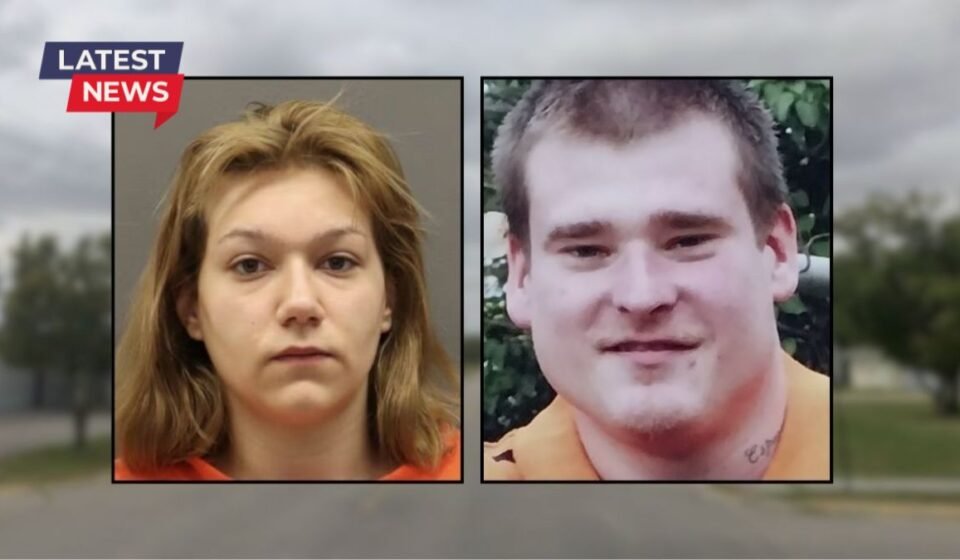
Woman who shot her boyfriend in the head and stole his dog had ‘sugar beets’ on the brain, among other things

The sirens that cut through the sub-zero chill of Pembina County, North Dakota, did not just signal another domestic dispute gone violent. They marked the beginning of one of the most bizarre criminal investigations in recent rural memory. When sheriff’s deputies rolled up to the snow-drifted driveway of a farmstead just outside of Cavalier, they expected the grim, familiar logistics of an aggravated assault. What they found instead was a survival miracle, a missing Blue Heeler named Buster, and a suspect whose subsequent interrogation would leave veteran investigators staring blankly at their notepads.
At the center of the case is Brenda Lindquist, a forty-two-year-old local resident now facing charges of attempted first-degree murder, grand theft, and animal theft. Her victim, long-time boyfriend Dale Miller, somehow survived a point-blank gunshot wound to the side of his head—a medical anomaly that emergency room physicians later attributed to the bullet miraculously deflecting off a dense section of the temporal bone. But while Miller was rushed into emergency surgery, Lindquist was already miles away, speeding down icy backroads with Miller’s pickup truck, his favorite dog, and a mind thoroughly consumed by an inexplicable obsession with sugar beets.
The Shot in the Dark
The timeline established by investigators suggests the couple’s relationship had been eroding for months, fueled by financial strain and worsening mental health struggles. Neighbors noted that Lindquist had grown increasingly reclusive over the winter, often seen pacing the perimeter of the property or engaging in loud, animated arguments with no one in particular. However, nothing prepared Miller for the events of late Tuesday evening.
According to the preliminary incident report, an argument erupted in the kitchen over an ostensibly trivial matter—the thermostat setting. As the disagreement escalated, Miller turned his back to walk into the living room. It was then that Lindquist allegedly retrieved a small-caliber revolver from a nearby drawer, stepped up behind him, and pulled the trigger.
Miller collapsed, bleeding heavily but remarkably conscious. Rather than calling emergency services or showing signs of panic, Lindquist reportedly walked over his prone body, grabbed the keys to his 2018 Chevy Silverado, and whistled for Buster. The dog, accustomed to riding in the truck, followed her out into the blinding snow. Miller, using what little strength he had left, crawled to his cell phone and dialed 911.
“The Beets Are Controlling the Frequency”
When state troopers finally cornered Lindquist at a gas station near the Canadian border three hours later, she surrendered without a fight. Buster was sitting safely in the passenger seat, unbothered by the unfolding chaos. But it was Lindquist’s demeanor during her initial arrest and subsequent booking that shifted the narrative from a standard tragic domestic shooting into something far more troubling and surreal.
During her first formal interview at the county jail, Lindquist bypassed any discussion of the shooting itself. When detectives pressed her on why she pulled the trigger, she repeatedly steered the conversation toward agriculture—specifically, the region’s vast sugar beet industry. According to leaked snippets of the interrogation transcript, she insisted that the local processing plants were not merely refining sugar but were using the massive, steaming piles of harvested beets along the highway to broadcast “biorhythmic frequencies” intended to alter her thoughts.
“She kept saying she had ‘sugar beets on the brain,'” one law enforcement source noted, speaking on the condition of anonymity because they were not authorized to discuss the active case. “We’ve seen drug-induced paranoia, and we’ve seen severe psychiatric breaks, but the absolute fixation on root vegetables as a weapon of mass surveillance was a new one for everyone in the room.”
Investigators quickly realized that this was not a sudden, spontaneous delusion. A search of the home she shared with Miller revealed hundreds of pages of handwritten journals. The notebooks were filled with dense, manic diagrams mapping out the locations of agricultural co-ops, regional soil data, and wild conspiracy theories linking the sugar content of local crops to everything from the cellular network layout to the movements of the federal reserve. Mixed in with these manifestos were detailed lists of things she needed to protect herself, with “Buster the dog” explicitly circled multiple times as a necessary “grounding agent” against the alleged frequencies.
A Community Left Reeling
In a tight-knit farming community where the annual sugar beet harvest is the lifeblood of the local economy, the details of the crime have evoked a strange mix of horror and bewilderment. Sugar beets are an ordinary, mundane staple of life in the Red River Valley; seeing them transformed into the centerpiece of a violent, paranoid delusion has left residents unsettled.
“Dale is a good, quiet guy who kept to himself and worked hard,” said Marcus Vance, a long-time family friend who lives a few miles down the road. “We knew Brenda was going through a rough patch, and everyone knows the winters out here can play tricks on your mind if you’re already isolated. But nobody saw this coming. It’s just heartbreaking all around, especially knowing how close he came to losing his life over something so completely unhinged.”
Meanwhile, Dale Miller’s recovery has been nothing short of extraordinary. Released from the intensive care unit just four days after the shooting, he is already back home, though facing a lengthy road of physical therapy and emotional recovery. Friends have rally around him, ensuring that his farm chores are looked after and, perhaps most importantly, that Buster was returned to him the moment the dog was cleared by animal control authorities.
The Legal Battle Ahead
As the criminal justice system takes over, the primary focus of the case has naturally shifted toward Lindquist’s mental state. Her defense attorney has already filed a motion requesting an immediate comprehensive psychological evaluation to determine whether she is legally competent to stand trial.
Legal experts suggest that an insanity defense or a plea of not guilty by reason of mental disease or defect is almost a certainty given the extensive documentation of her delusions prior to the shooting. However, prosecutors are maintaining a firm stance for the time being, pointing out the calculated nature of her flight, the theft of the vehicle, and the intentional taking of the victim’s dog as evidence of a structured, goal-oriented escape plan despite the underlying madness.
Brenda Lindquist remains held without bond at the Pembina County Correctional Center on charges of attempted murder, aggravated assault with a deadly weapon, grand theft of a motor vehicle, and misdemeanor theft of a companion animal. Her preliminary hearing is scheduled for next month, pending the results of her psychiatric assessments.
For the residents of Cavalier, the upcoming trial will offer little comfort, but rather a somber look into how easily a mind can slip through the cracks of reality, turning an ordinary rural life into a headline that reads more like dark fiction than the devastating reality it truly is.