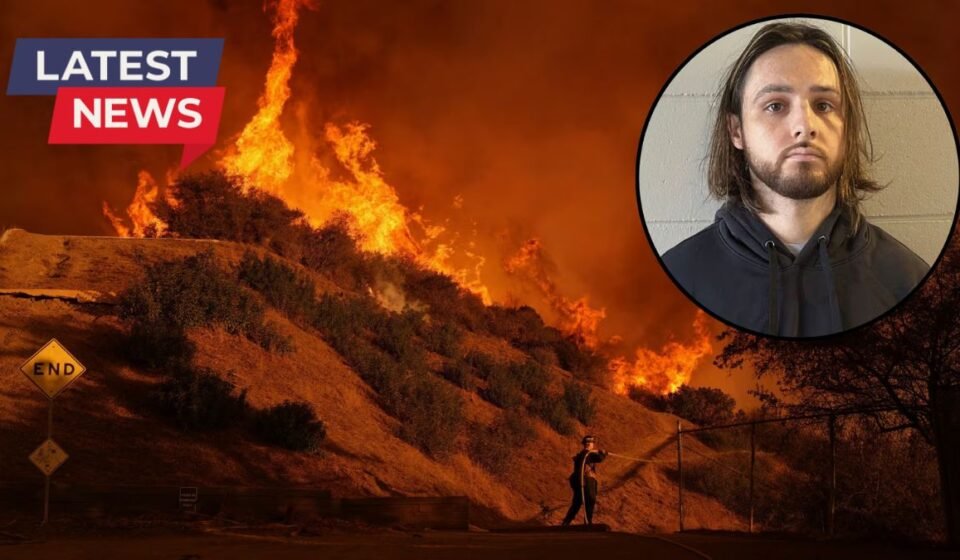

A federal judge has declared a mistrial in the closely watched arson case involving the devastating 2025 Palisades Fire after jurors failed to reach a unanimous verdict. The decision marks a significant development in one of California’s most consequential wildfire-related criminal cases, leaving questions about accountability, evidence, and the next steps for prosecutors.
The defendant, Jonathan Rinderknecht, had been accused of intentionally starting a small brush fire that authorities say later reignited and became the catastrophic Palisades Fire. Despite days of testimony and more than 13 hours of jury deliberations, the panel remained deadlocked, prompting the court to end the trial without a verdict.
Judge Declares a Mistrial After Jury Deadlock
The mistrial was declared after jurors informed the court they were unable to unanimously agree on whether the defendant was guilty. According to court records, the jury was divided 10-2 in favor of acquittal, making it impossible to reach the unanimous decision required in a federal criminal trial.
Judge Anne Hwang ruled that the jury had reached an irreversible impasse, describing the situation as a “manifest necessity” for declaring a mistrial. Prosecutors had requested additional deliberation, but the judge concluded that forcing further discussion could pressure jurors into abandoning sincerely held views.
The Charges Against the Defendant
Federal prosecutors charged Jonathan Rinderknecht with three felony offenses:
- Arson affecting property used in interstate commerce
- Malicious destruction of property by fire
- Timber set afire
Authorities alleged that Rinderknecht intentionally ignited what became known as the Lachman Fire on January 1, 2025. Investigators argued that although firefighters initially contained the blaze, underground embers continued to smolder for several days. When powerful Santa Ana winds swept through Southern California, those embers allegedly reignited, triggering the massive Palisades Fire.
A Wildfire That Devastated Southern California
The Palisades Fire ranks among the most destructive wildfires in Los Angeles County history.
The blaze burned more than 23,000 acres across Pacific Palisades and neighboring communities. It claimed the lives of 12 people, destroyed over 6,000 homes and businesses, and forced thousands of residents to evacuate. Property losses and economic damage have been estimated at well over $100 billion, making it one of the costliest natural disasters California has experienced.
Recovery efforts have continued for more than a year, with rebuilding projects still underway in many neighborhoods heavily damaged by the fire.
Prosecutors Presented Circumstantial and Digital Evidence
During the trial, federal prosecutors relied on a combination of physical, digital, and circumstantial evidence.
The government presented cellphone location records, surveillance footage, witness testimony, and investigators’ analysis to place Rinderknecht near the origin of the fire. Prosecutors argued that the evidence collectively demonstrated he intentionally started the blaze.
One of the more unusual aspects of the trial involved the introduction of ChatGPT conversation logs. Prosecutors claimed the AI conversations reflected the defendant’s interest in fire-related imagery and hypothetical discussions about responsibility for fires. They argued these digital records helped establish motive and intent.
Defense Challenged the Government’s Theory
Defense attorneys strongly disputed the prosecution’s case, arguing there was no direct evidence proving their client started the fire.
The defense maintained that fireworks used during New Year’s celebrations were a more likely source of ignition. Attorneys also emphasized conflicting eyewitness accounts and questioned the government’s reconstruction of how the initial blaze evolved into the catastrophic wildfire days later.
Throughout the proceedings, the defense portrayed Rinderknecht as someone who actually reported the fire rather than caused it, insisting prosecutors failed to eliminate reasonable doubt.
Why the Jury Could Not Reach a Verdict
The split verdict highlights the challenges prosecutors often face in complex wildfire cases, particularly when proving intent beyond a reasonable doubt.
Although investigators believed the evidence pointed toward deliberate arson, many jurors apparently found the case insufficiently conclusive. The defense successfully raised questions about alternative causes, including fireworks and uncertainties surrounding the fire’s progression.
Legal experts note that a mistrial does not determine guilt or innocence. Instead, it simply reflects that the jury could not unanimously agree after thorough deliberation.
Prosecutors Plan to Retry the Case
Despite the mistrial, federal prosecutors have announced their intention to pursue a second trial.
The U.S. Attorney’s Office maintains that the evidence remains strong enough to seek another conviction. Court records indicate a retrial is tentatively scheduled for October 2026, while the defendant remains in federal custody pending further proceedings.
The upcoming retrial may feature revised legal strategies as both sides evaluate the first jury’s inability to reach consensus.
Broader Impact of the Palisades Fire
Beyond the criminal case, the Palisades Fire continues to influence public debate over wildfire prevention, emergency preparedness, and disaster response in California.
Thousands of affected residents have filed lawsuits alleging shortcomings in emergency management and firefighting efforts. Meanwhile, rebuilding continues across Pacific Palisades as communities work to recover from one of the state’s most destructive wildfire disasters.
The mistrial underscores the legal complexity of assigning criminal responsibility for catastrophic wildfires, particularly when multiple environmental factors—including weather, terrain, and firefighting operations—may influence how a fire spreads.
Conclusion
The declaration of a mistrial in the Palisades Fire arson case represents an important turning point in a prosecution tied to one of California’s deadliest recent wildfires. While jurors could not unanimously determine whether Jonathan Rinderknecht was criminally responsible, the legal battle is far from over. With federal prosecutors preparing for a retrial later this year, the case is expected to remain under close public scrutiny as investigators, survivors, and the courts continue seeking answers about the disaster that forever changed large parts of Southern California.