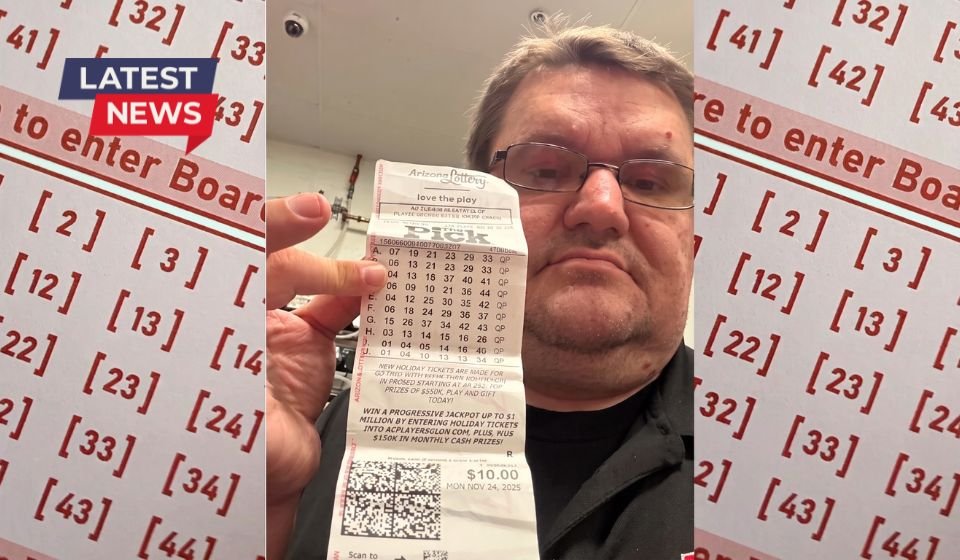
He Thought He’d Won a $12.8 Million Lottery Jackpot. Instead, He Ended Up Shockingly Fighting His Employer in Court.

What should have been the happiest day of Robert Gawlitza’s life instead became the center of one of Arizona’s most unusual lottery disputes. The former Circle K manager believed he had legally purchased a winning Arizona Lottery ticket worth $12.8 million after discovering it had been left behind at his store. Instead of celebrating a life-changing jackpot, he found himself fired from his job and locked in a complex legal battle involving his former employer, multiple claimants, and the Arizona Lottery.
The dispute has drawn widespread attention because it raises difficult questions about ownership of lottery tickets, retailer policies, employee conduct, and whether a winning ticket can legally change hands after the winning numbers have already been drawn.
How the Winning Ticket Was Printed
Customer Purchased Only Part of an Order
According to court filings, the dispute began on November 24, 2025, at a Circle K convenience store near 56th Street and Bell Road in Phoenix, Arizona.
A customer identified in court records as Soonchun “Anna” Kim requested Arizona Lottery “The Pick” tickets. During the transaction, approximately $85 worth of lottery tickets were printed. However, the customer only paid for $60 worth of tickets, leaving roughly $25 worth of printed tickets behind at the store.
Those remaining tickets were never purchased by the customer and stayed inside the store overnight.
Winning Numbers Were Drawn Overnight
Later that evening, the Arizona Lottery conducted the drawing for “The Pick.”
One of the abandoned tickets matched all six winning numbers—3, 13, 14, 15, 19, and 26—making it the sole winner of a jackpot valued at approximately $12.8 million.
At that point, nobody had attempted to claim the ticket.
Robert Gawlitza Discovers the Winning Ticket
Manager Learned the Winning Ticket Was at His Store
The following morning, Robert Gawlitza arrived for work and learned that the winning ticket had been sold—or at least printed—at his Circle K location.
He searched for the remaining printed tickets and found the jackpot-winning ticket among those left behind after the previous day’s incomplete purchase.
Realizing its enormous value, Gawlitza did not immediately attempt to claim it while working.
He Clocked Out Before Purchasing the Ticket
According to Gawlitza and his attorneys, he followed procedures designed to comply with Arizona Lottery regulations.
He reportedly:
- Clocked out from work.
- Removed his Circle K uniform.
- Had another employee complete the transaction.
- Paid approximately $10 for the remaining lottery tickets.
- Received a sales receipt.
- Signed the back of the winning ticket as its owner.
Gawlitza has consistently argued that these steps made him the lawful purchaser and rightful owner of the jackpot.
Circle K Challenged the Ownership
Company Asked Court to Decide Who Owns the Ticket
Circle K later took possession of the winning ticket and filed a declaratory judgment action in Maricopa County Superior Court.
Rather than immediately claiming ownership of the jackpot itself, the company asked the court to determine who legally owns the winning ticket and how the Arizona Lottery should distribute the prize.
The company has maintained that it is seeking judicial guidance because of the unusual circumstances surrounding the ticket.
Circle K has argued that important legal questions remain unanswered, including whether the ticket was ever legally sold after the drawing and whether Arizona Lottery rules permitted such a transaction.
Former Manager Says He Followed Company Policy
Gawlitza Claims Employees Were Required to Buy Leftover Tickets
In response to Circle K’s lawsuit, Gawlitza denied wrongdoing and argued that he simply followed a long-standing company practice.
According to his legal filings, employees were expected to purchase accidentally printed or abandoned lottery tickets rather than leaving them unpaid.
His attorney has argued that this unofficial practice was well known among employees and had been followed for years without objection.
Court Filing Includes Supporting Evidence
To support his claims, Gawlitza’s legal team submitted several pieces of evidence, including:
- Six sworn affidavits from current and former Circle K employees.
- Text messages allegedly showing a district manager approving the process of clocking out, removing a work uniform, purchasing lottery tickets, and returning to work.
- The purchase receipt documenting the transaction.
- References to company handbook provisions stating employees may purchase lottery tickets while off duty.
According to Gawlitza’s attorneys, Circle K only challenged the purchase after discovering that one of the tickets was worth millions of dollars.
Former Employee Says He Was Wrongfully Fired
Employment Ended After Jackpot Dispute
Gawlitza, who reportedly worked for Circle K for approximately 20 years, says he was terminated after asserting ownership of the winning ticket.
His legal filings accuse the company of wrongfully taking possession of the ticket after he had signed it and lawfully purchased it.
His attorneys argue that he followed established company procedures and should not have been punished for doing so.
Multiple People Have Claimed an Interest
Additional Claims Complicate the Case
The ownership dispute has expanded beyond Gawlitza and Circle K.
Former Circle K employee Marline Ybarra has also asserted an interest in the jackpot. Court filings indicate she was involved in the transaction when the ticket was purchased, and reports state that she and Gawlitza had discussed sharing any winnings.
The original customer whose transaction produced the tickets has also been identified during the litigation, further complicating questions about who, if anyone, legally owned the winning ticket at the time of the drawing.
These competing claims have made the case significantly more complicated than a typical lottery ownership dispute.
Arizona Lottery Has Not Released the Money
Jackpot Remains Frozen
Because ownership remains unresolved, the Arizona Lottery has not paid the $12.8 million prize.
The money is being held until the courts determine who is legally entitled to claim the jackpot.
The claim period has effectively been preserved while the litigation continues, ensuring the prize will not expire before a final legal decision is reached.
Legal Questions at the Center of the Case
Court Must Decide Several Unprecedented Issues
The lawsuit presents several unusual legal questions, including:
- Whether printed but unpaid lottery tickets legally belonged to the retailer.
- Whether those tickets could legally be purchased after the winning numbers had already been drawn.
- Whether Arizona Lottery regulations permitted the transaction.
- Whether Circle K’s alleged internal policies created enforceable rights for employees.
- Whether signing the ticket established legal ownership.
- Whether any of the competing claimants have a superior legal claim to the jackpot.
The answers to these questions are expected to determine who ultimately receives the multi-million-dollar prize.
Case Remains Pending
No Final Winner Has Been Declared
As of July 2026, no court has ruled on the rightful owner of the $12.8 million Arizona Lottery jackpot.
Gawlitza continues to maintain that he legally purchased the winning ticket after following company policy and Arizona Lottery rules by clocking out before making the purchase.
Circle K continues to seek a judicial determination regarding ownership rather than releasing the ticket or recognizing any claimant.
Until the court issues a final decision, one of Arizona’s largest lottery jackpots remains frozen, leaving what began as a dream of instant wealth transformed into an extraordinary courtroom battle whose outcome could set an important precedent for future lottery ownership disputes.