Federal task force designed to make Memphis safer faces scrutiny after two deadly shootings by law enforcement in one week

The intersection of federal law enforcement intervention and local community policing has long been a flashpoint in American cities, but in Memphis, Tennessee, that tension has reached a boiling point. A controversial federal crime-fighting initiative, designed to curb violent crime and restore order, has instead found itself under intense community and legal scrutiny. The source of this growing friction is a pair of fatal shootings by task force members occurring within a span of just four days. These consecutive tragedies have reignited a furious debate over accountability, the heavy-handedness of federal deployments, and whether the strategy is doing more to endanger residents than to protect them.
The Two Shootings
The first fatal encounter occurred in the early hours of a Sunday morning in downtown Memphis. Members of the Tennessee National Guard, deployed as part of the federal task force, were working alongside local police officers when they responded to reports of gunfire around 4:00 a.m.. According to law enforcement statements, guardsmen began a foot pursuit of an armed individual fleeing the scene. The pursuit ended in gunfire when authorities claim the man turned toward them with a weapon, prompting the Guardsmen to open fire.
The deceased was later identified as 20-year-old Tyrin Johnson. Despite medical aid administered at the scene by Guard specialists, Johnson succumbed to his injuries. His family quickly questioned the official narrative, demanding answers and transparency. Relatives stated that state investigators informed them Johnson had been shot twice in the chest, prompting public demands from his grandfather for the release of any available video footage to verify the official sequence of events.
Before the community could process Johnson’s death, the task force was involved in a second fatal shooting the following Wednesday morning. This time, the encounter involved agents from the U.S. Drug Enforcement Administration who were serving a narcotics warrant out of Shelby County at a local hotel.
According to spokespersons for the U.S. Marshals Service, the suspect barricaded himself inside a hotel room and refused to comply with orders to open the door. Agents breached the door, and early reports from the Marshals Service alleged the suspect pointed a handgun at the tactical team. The Tennessee Bureau of Investigation, which assumes the lead on independent probes of officer-involved shootings in the state, offered a more guarded assessment, stating only that the situation escalated and resulted in a DEA agent firing into the room, killing the occupant. The man killed in the hotel room was later identified as 47-year-old Alfonso Ivy.
A Deeper Pattern of Violence
What has alarmed local advocates and civil rights groups is that these two incidents are not isolated anomalies. They represent the continuation of a lethal pattern since the task force ramped up its presence. According to records maintained by the Tennessee Bureau of Investigation, at least four individuals have died at the hands of task force members.
Earlier in the spring, a DEA agent assigned to the task force shot and killed 41-year-old Darrin Pigram while attempting to execute an arrest warrant after Pigram allegedly reached for a firearm in his waistband. Barely a week after that incident, a Homeland Security Investigations special agent operating under the same task force umbrella fired upon 25-year-old Jonah Neal. While state investigators noted that Neal was armed and threatening self-harm, the exact cause of death remained tangled between the gunshot wound and self-inflicted injuries.
The rapid accumulation of bodies has fundamentally altered the conversation surrounding the task force from one of civic optimization to one of existential survival for the city’s vulnerable populations. Local lawmakers, including State Representative Justin Pearson, have forcefully chimed in, demanding exhaustive, transparent investigations into every single discharge of a firearm by task force personnel.
The Genesis of the Task Force
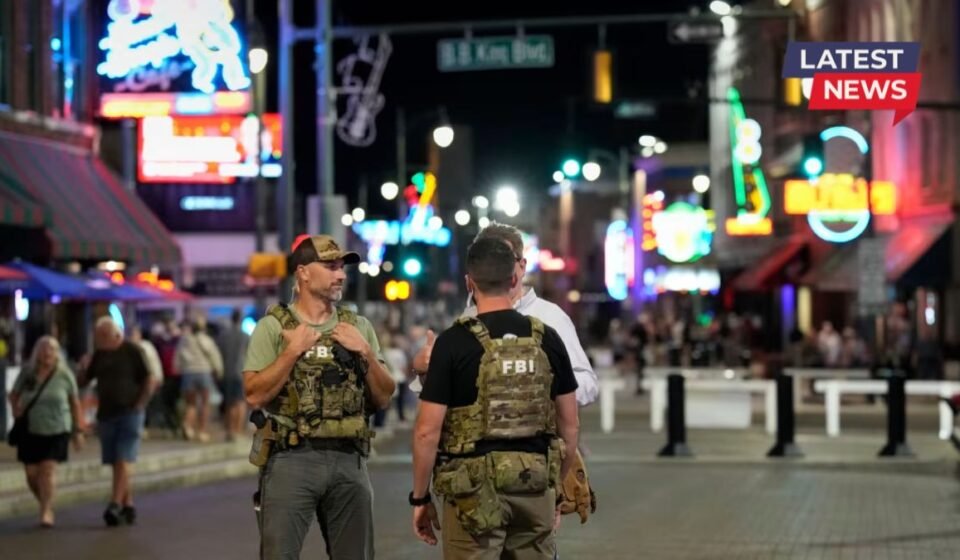
To understand the depth of the local backlash, one must examine the political and operational origins of the Memphis Safe Task Force. The unit was conceived as part of an aggressive push by the Trump administration to inject federal law enforcement assets and National Guard troops into heavily populated, Democratic-led metropolitan areas flagged for high violent crime rates. While similar attempts to deploy military personnel to other American cities faced successful blockades in federal courts, the deployment in Tennessee found a clear runway.
The dynamic created a stark partisan and jurisdictional divide. Republican Governor Bill Lee threw his full support behind the initiative, authorizing the deployment of Tennessee National Guard troops to patrol the streets of Memphis alongside local police officers. Conversely, local Democratic leadership, including Memphis Mayor Paul Young, consistently voiced deep skepticism and outright objections to the federal footprint, arguing that an influx of outside tactical units was an unnecessary escalation that bypassed traditional local community guardrails.
The friction eventually spilled into the courtroom. Local officials attempted to legally halt the domestic military deployment, but the Tennessee Court of Appeals dealt them a major blow, ruling that state and local Democratic officials lacked the necessary legal standing to block the governor’s deployment of troops. Consequently, armed Guardsmen in camouflage became a regular fixture on the streets of Memphis, tasked with a civilian law enforcement mandate they were fundamentally not native to.
Surveillance, Retaliation, and Legal Warfare
As the task force expanded its operations, local residents began documenting what they described as an occupying force operating with total impunity. The friction gave birth to a second, ongoing federal lawsuit filed by four Memphis residents represented by the American Civil Liberties Union.
The lawsuit targets the task force’s aggressive enforcement of a controversial state law that prohibits citizens from approaching within 25 feet of law enforcement officers. Plaintiffs argue the law is being weaponized to systematically prevent the public from filming police encounters and holding officers accountable.
More disturbingly, the suit alleges a coordinated campaign of intimidation and retaliation against regular citizens who attempt to document the task force’s tactical operations. Residents testified to being tailed by unmarked law enforcement vehicles and having unidentified individuals clad in tactical vests park outside their private homes shortly after they were spotted filming task force activities in public spaces. This climate of surveillance has deeply alienated a community that was already deeply untrusting of law enforcement in the wake of previous high-profile police killings in the city.
Data vs. Deployment
The core justification for the task force’s immense cost—which the Congressional Budget Office calculated at nearly half a billion dollars initially, with projections ballooning past $1 billion annually—was that Memphis was trapped in an uncontrollable wave of violent crime that local authorities could not contain.
However, criminologists and local officials point to a glaring contradiction in the timeline: violent crime in Memphis had already begun a steep downward trajectory well before the federal task force and National Guard troops hit the pavement. According to internal data compiled by the Memphis Police Department under Chief C.J. Davis, the city experienced historic drops across all major crime categories throughout 2025 and into 2026. Homicides plummeted by significant double-digit percentages, overall violent crime dropped by roughly 30 percent, and property crimes like motor vehicle thefts and carjackings were sliced in half through targeted local initiatives, tech expansion, and localized community partnerships.
This statistical reality has left community advocates asking a painful question: If local strategies were already successfully driving down crime, why was a billion-dollar federal operation pushed into the city, only to leave a trail of dead citizens in its wake?
An Uncertain Path Forward
Following the twin fatalities, Mayor Paul Young termed the events highly unfortunate but urged the public to withhold definitive judgment until the Tennessee Bureau of Investigation concludes its comprehensive review of both shootings. Yet for a community exhausted by structural violence, patience has worn paper-thin.
The double shooting week has laid bare the fundamental flaw of relying on militarized, top-down federal interventions to solve complex local social issues. When external forces enter a community with high-powered weaponry, vague local accountability, and a mandate rooted in a war-zone mentality, the line between public safety and public peril disappears entirely. The Memphis Safe Task Force may have been designed to make the city safer, but for many Memphians, it has simply introduced a deadly new variable to the streets they call home.