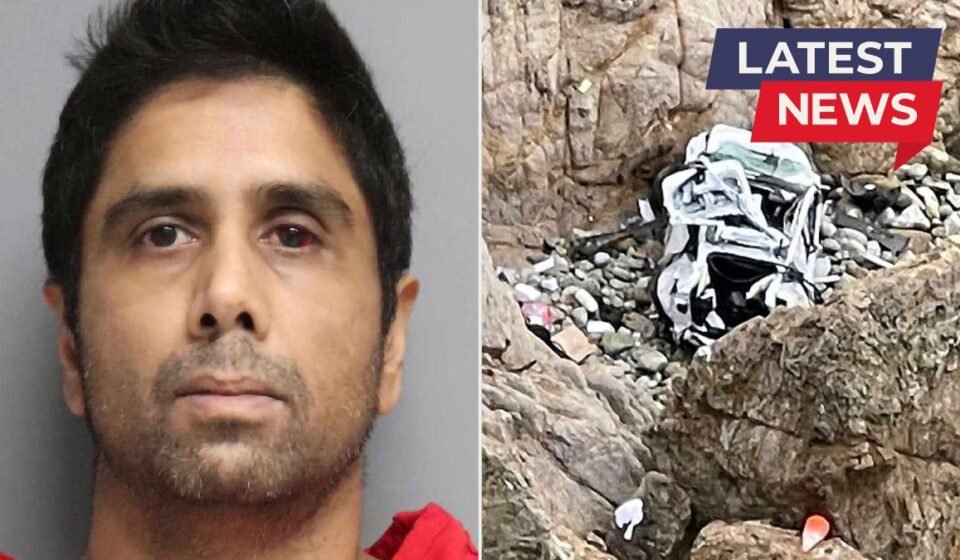

A California judge has dismissed all attempted murder charges against Dr. Dharmesh Patel, a radiologist who was accused of intentionally driving his Tesla off a 250-foot cliff with his wife and two young children inside. The dramatic case, which shocked the nation in 2023, ended after Patel successfully completed a court-approved mental health treatment program.
What Happened in the Tesla Cliff Crash?
The incident occurred on January 2, 2023, at Devil’s Slide, a dangerous stretch of the Pacific Coast Highway in California. Authorities alleged that Patel deliberately drove his Tesla Model Y off a cliff approximately 250 feet high while his wife and two children were passengers.
Despite the severity of the crash, all four family members survived. Rescue teams described the survival as nothing short of miraculous. The vehicle landed on rocky terrain below the cliff, and emergency responders worked for hours to rescue the occupants.
Criminal Charges Filed Against Patel
Following an investigation, prosecutors charged Patel with three counts of attempted murder and additional allegations related to the injuries suffered by his family members. Authorities believed the crash was intentional rather than an accident.
If convicted, Patel could have faced a lengthy prison sentence.
Mental Health Became the Center of the Case
As the legal proceedings continued, Patel’s defense team argued that he was experiencing a severe mental health crisis at the time of the crash. Medical experts testified that he suffered from major depressive disorder accompanied by psychotic symptoms and hallucinations.
According to court records, Patel reportedly experienced delusions and irrational beliefs that affected his ability to make decisions during the incident. Mental health specialists concluded that treatment rather than incarceration was the most appropriate response.
Judge Approved Mental Health Diversion Program
In 2024, Patel was granted entry into California’s mental health diversion program. The program allows certain defendants with qualifying mental health conditions to receive treatment instead of facing a traditional criminal trial.
Under the court’s supervision, Patel underwent extensive psychiatric treatment for two years. His progress was monitored by mental health professionals, including a psychiatrist and therapist.
Charges Officially Dismissed
After successfully completing the treatment program, a San Mateo County judge dismissed all attempted murder charges against Patel. Under California law, judges are required to dismiss qualifying charges when defendants complete approved diversion programs.
The court also lifted several restrictions that had been placed on Patel, including passport limitations and certain protective orders.
Wife Supported Treatment Instead of Prison
One of the most notable aspects of the case was the position taken by Patel’s wife. While initial reports indicated she believed the crash was intentional, she later expressed support for her husband’s treatment and recovery. She reportedly told the court that she wanted the family to heal and reunite.
Court testimony also revealed that the children wanted their father to return home after receiving treatment.
Medical License Surrendered
Although Patel avoided a criminal conviction, the case had significant professional consequences. He surrendered his medical license as part of proceedings involving California medical authorities.
The loss of his license effectively ended his ability to practice medicine in California.
Prosecutors Criticize the Outcome
The dismissal has sparked debate about California’s mental health diversion laws. Prosecutors argued that serious crimes such as attempted murder should not qualify for diversion programs and expressed concern that the law limited the court’s options.
Some officials have called for legislative changes that would prevent individuals accused of violent crimes from using similar diversion programs in the future.
Conclusion
The case of Dr. Dharmesh Patel became one of California’s most closely watched criminal proceedings because of the extraordinary circumstances surrounding the cliff crash and the survival of his family. After two years of mental health treatment, the court dismissed all charges, concluding a case that raised difficult questions about criminal responsibility, mental illness, and rehabilitation. While Patel avoided prison, the incident continues to fuel discussions about how the justice system should handle serious crimes involving mental health disorders.