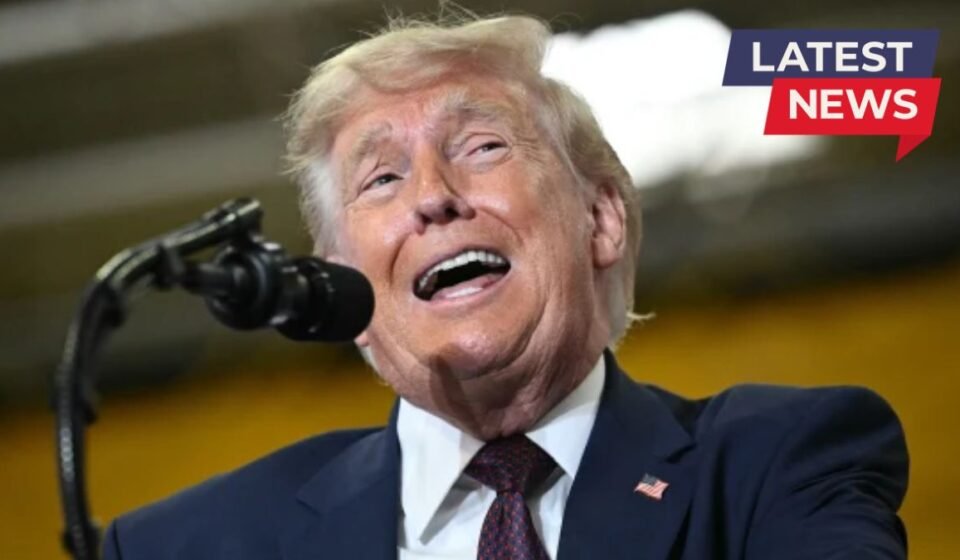

The U.S. Supreme Court has delivered one of the most significant rulings on presidential authority in decades, handing President Donald Trump a major legal victory that could reshape the balance of power within the federal government. In a closely divided 6-3 decision, the Court ruled that the president has broad authority to remove the leaders of many independent federal agencies, overturning a legal precedent that had stood for more than 90 years.
The ruling marks a major shift in how the executive branch functions and could have lasting consequences for future presidents, Congress, and independent regulatory agencies. Supporters argue the decision strengthens democratic accountability, while critics warn it could undermine the independence of agencies responsible for regulating businesses, protecting consumers, and enforcing federal laws.
Supreme Court Overturns a 91-Year-Old Precedent
The case centered on President Trump’s dismissal of Federal Trade Commission (FTC) Commissioner Rebecca Slaughter in 2025. Federal law had long protected FTC commissioners from being removed without cause, allowing dismissal only for reasons such as inefficiency, neglect of duty, or misconduct.
However, the Supreme Court ruled that these protections violate the Constitution’s separation of powers by limiting the president’s ability to oversee executive officials. In doing so, the Court overturned the landmark 1935 decision in Humphrey’s Executor v. United States, which had protected the independence of many federal agencies for generations.
Chief Justice John Roberts, writing for the majority, concluded that executive officials who exercise presidential authority must remain accountable to the president. According to the Court, Congress cannot prevent presidents from removing officials who carry out executive functions.
What the Decision Means
The ruling significantly expands presidential authority over independent regulatory agencies that were previously designed to operate with limited political influence.
Agencies potentially affected include:
- Federal Trade Commission (FTC)
- Securities and Exchange Commission (SEC)
- National Labor Relations Board (NLRB)
- Consumer Financial Protection Bureau (CFPB)
- Several other independent commissions established by Congress
Previously, commissioners often served fixed terms that continued across multiple presidential administrations. That structure was intended to ensure policy continuity and political independence.
Following the Court’s decision, future presidents will have greater flexibility to replace agency leaders with officials who support their policy agendas.
Why Trump Considered This a Major Victory
President Trump has repeatedly argued that the executive branch should answer directly to the elected president rather than to independent bureaucracies. His administration has long supported the constitutional theory known as the “unitary executive,” which holds that executive power should remain firmly under presidential control.
The Supreme Court’s decision largely validates that argument by confirming that presidents possess broad removal authority over executive officers.
Trump praised the ruling as a historic victory for presidential authority and argued it would make the federal government more accountable to voters because elected presidents—not unelected agency officials—would ultimately direct executive policy.
Critics Warn About Political Influence
Opponents of the ruling believe it weakens an important safeguard that has protected federal agencies from political pressure for decades.
Legal scholars, former government officials, and Democratic lawmakers argue that independent agencies were intentionally created by Congress to make technical and regulatory decisions without direct White House interference.
Critics fear future presidents could replace experienced regulators whenever political priorities change, potentially affecting areas such as:
- Consumer protection
- Financial regulation
- Labor rights
- Election oversight
- Antitrust enforcement
- Environmental policy
They argue the decision could make regulatory enforcement more political and less consistent over time.
An Important Exception: The Federal Reserve
Although the Court greatly expanded presidential authority, it stopped short of giving the president complete control over every independent agency.
In a separate ruling, the justices allowed Federal Reserve Governor Lisa Cook to remain in office while her legal challenge continues, signaling that the Federal Reserve’s unique role in managing monetary policy may justify stronger independence.
Many economists viewed this exception as important because political interference in interest-rate decisions could undermine confidence in financial markets.
Broader Constitutional Debate
The ruling represents another major chapter in the Supreme Court’s ongoing effort to redefine the relationship between Congress and the executive branch.
Supporters believe the Constitution places executive authority squarely in the hands of the president, who should therefore control officials responsible for carrying out federal laws.
Critics counter that Congress has historically possessed the authority to design independent agencies that operate outside direct presidential control. They argue the Court’s decision shifts power away from Congress and concentrates more authority in the White House than at any point in modern history.
Because many federal agencies exercise enormous influence over the U.S. economy and public policy, the decision could reshape how government functions for decades regardless of which political party controls the presidency.
Conclusion
The Supreme Court’s decision marks one of the most consequential constitutional rulings on executive power in recent history. By overturning nearly a century of legal precedent, the Court has dramatically expanded presidential authority over much of the federal bureaucracy while preserving limited independence for institutions such as the Federal Reserve.
For President Trump, the ruling represents a significant legal and political victory that strengthens executive control over the federal government. For critics, it raises concerns about increasing presidential influence over agencies that were created to remain politically independent.
The full impact of the decision will likely unfold over the coming years as future administrations test the expanded authority recognized by the Supreme Court and as new legal challenges emerge over the scope of presidential power.