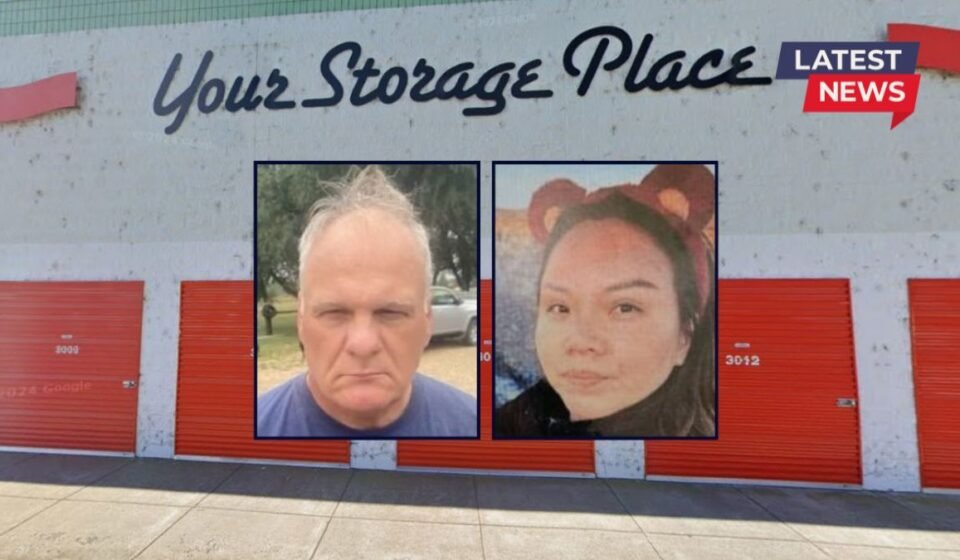
Man drove around for days with dead fiancee inside a plastic tote, packed body with charcoal briquettes to mask the smell in storage unit: DA

In a chilling criminal case that has stunned communities and gripped true-crime investigators, prosecutors have unveiled details of a bizarre and deeply disturbing sequence of events. A man allegedly killed his fiancée, hid her body inside a large plastic storage tote, and drove around with the decomposing remains in the back of his vehicle for days.
According to the District Attorney’s office, the suspect eventually rented a public storage unit to stash the container, intentionally packing the victim’s remains with charcoal briquettes in a desperate bid to mask the powerful odor of decay. The gruesome discovery was only made months later when the storage unit’s rent went unpaid, and the contents were sold off to an unsuspecting buyer at a public auction.
This case exposes a calculated, desperate cover-up that ultimately unraveled through a combination of financial neglect and the routine operations of a storage facility.
The Disappearance and the Initial Deception
The victim, 39-year-old Meihong He, known affectionately to her friends as “Kiki,” disappeared under mysterious circumstances. The timing of her disappearance was particularly tragic, occurring just days before she and her fiancé, Richard Michael Robinson, were scheduled to be married.
When friends and family members grew worried about her sudden absence, Robinson allegedly constructed a web of lies to deflect suspicion. He told local law enforcement and concerned relatives that he had dropped his fiancée off near a remote wilderness area so she could go fishing with friends, claiming she simply never returned from the trip.
Because the area specified by Robinson was known for its rugged terrain, initial fears centered around a potential outdoor accident or a missing person case in the wild. For over a year, loved ones were left suspended in agonizing uncertainty, holding out hope for answers while investigators quietly worked to verify the timeline provided by the groom-to-be.
A Gruesome Multi-Day Journey
As the investigation slowly progressed behind the scenes, the true horror of what occurred immediately following her disappearance began to crystallize. According to prosecutors and admissions later detailed in court documents, the fishing trip story was an outright fabrication.
The District Attorney revealed that the victim had been killed inside the couple’s shared living space. Robinson allegedly admitted to being present during her death, stating she was asphyxiated. Rather than contacting emergency services or calling the police, Robinson allegedly moved her body into another room and went to sleep.
The following day, Robinson embarked on a calculated effort to conceal the crime. He purchased a large, 77-gallon heavy-duty black plastic storage tote, packed his fiancée’s body inside, and secured the container using a combination of plastic wrap, heavy ratchet straps, and industrial zip ties.
Instead of hiding the container immediately, Robinson placed the heavy tote into the back of his pickup truck and went about his life. For several days, he drove around the Pacific Northwest with his deceased fiancée in the truck bed. Court records indicate he even traveled a significant distance across state lines to attend his daughter’s birthday party, all while the decomposing remains remained concealed just feet away in the back of his vehicle.
The Storage Unit Cover-Up and the Charcoal Method
Realizing that keeping the body in his truck was a dangerous and unsustainable long-term strategy, Robinson eventually sought a semi-permanent hiding place. He pulled into a commercial self-storage facility and rented a secure, indoor storage unit.
However, storing a human body in an un-climate-controlled environment presents a massive obstacle for any criminal: the inevitable odor of decomposition. To combat this, the District Attorney detailed how Robinson utilized an rudimentary chemical trick. He heavily packed the interior of the plastic tote and the surrounding areas with bags of commercial charcoal briquettes.
Unactivated charcoal is highly porous and widely known to absorb moisture and chemically neutralize volatile organic compounds, which are the gases responsible for the distinct, pungent smell of decaying flesh. By surrounding the body with charcoal briquettes, Robinson managed to suppress the odor severely enough that it did not immediately alert neighboring renters or the storage facility staff. He locked the unit, walked away, and likely believed he had successfully executed the perfect concealment.
The Auction and the Horrific Discovery
The gruesome plot ultimately fell apart not due to a sudden breakthrough in forensic science, but because of a mundane financial failure. Over a year after renting the unit, Robinson stopped making his monthly rental payments.
Following standard industry protocols and state laws regarding abandoned property, the storage facility management sent multiple notices regarding the overdue balance. When the account remained delinquent, the facility cut the lock and placed the contents of the unit up for public auction to recover the lost rent.
An independent buyer purchased the unit’s contents sight unseen, expecting to find abandoned household goods, tools, or furniture. Instead, while clearing out their newly acquired property, the buyer noticed a massive, tightly sealed 77-gallon plastic tote emitting a suspicious odor despite the heavily degraded charcoal surrounding it.
Upon closer inspection, the buyer noticed the heavy layering of ratchet straps, plastic sheeting, and zip ties. Realizing that something was terribly wrong, the buyer immediately contacted local police. Detectives arrived on the scene, cut through the bindings, and discovered the severely decomposed remains of Meihong He inside.
Forensic Analysis and the Autopsy Results
The recovery of the remains allowed the state medical examiner to conduct a thorough forensic autopsy, which quickly disproved any lingering notions that the victim might have suffered an accidental death or medical emergency.
The medical examiner determined that the victim died from homicidal asphyxiation. Specifically, the forensic reports noted that her airways had been intentionally sealed using industrial tape and plastic layers before her body was placed inside the container. The ruling of homicide provided prosecutors with the definitive medical evidence required to elevate the case from an abuse of a corpse investigation into a full-scale murder prosecution.
Flight, Arrest, and Legal Proceedings
By the time the body was discovered, Robinson had fled the region. Law enforcement launched a multi-agency manhunt, tracking his digital footprint and past associations across several states.
The break in the search came when detectives located Robinson living in Colorado under a completely fabricated alias. He was arrested on an outstanding warrant for failing to register as a sex offender—a reflection of a prior felony conviction in his past—before being heavily interrogated regarding the murder of his fiancée. It was during these subsequent interviews that Robinson’s initial narrative completely collapsed, leading to the shifting stories and eventual admissions regarding the plastic tote and the multi-day drive.
Because the crime crossed multiple jurisdictions—with the murder allegedly occurring in one county and the concealment and abandonment of the body taking place across state lines in a neighboring jurisdiction—Robinson faces a complex, multi-layered legal battle. Prosecutors have formally hit him with a slate of severe charges, including second-degree murder, first-degree kidnapping, and second-degree abuse of a corpse.
He is currently being held on a one-million-dollar cash bail as both counties coordinate their respective criminal cases. The District Attorney’s office has emphasized that while the cover-up was highly calculated and deeply disturbing, the systematic collection of physical evidence, storage facility records, and forensic data will ensure that justice is fully pursued in court.