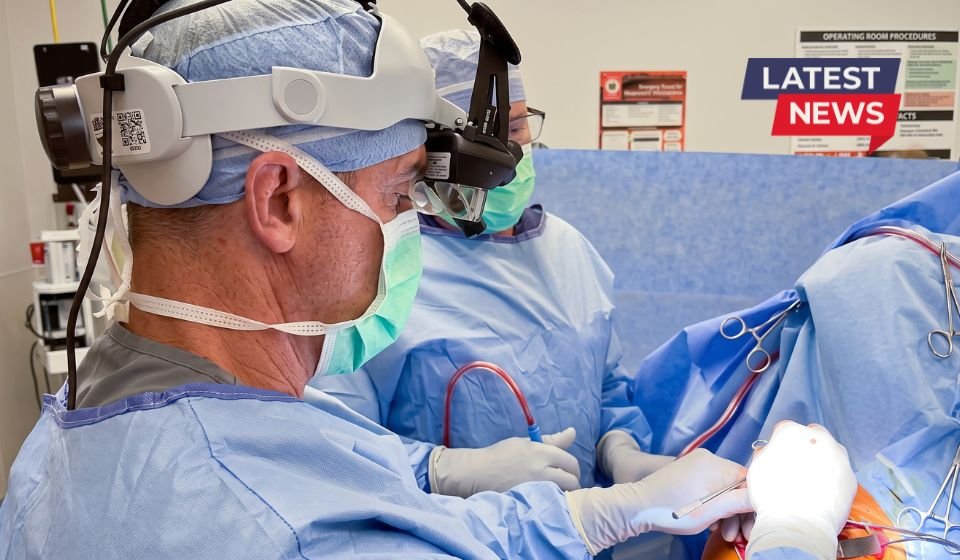

Arizona has reached a new milestone in orthopedic medicine after an orthopedic surgeon successfully completed the state’s first augmented reality (AR)-assisted shoulder replacement procedure. The groundbreaking operation represents a significant advancement in surgical technology, combining decades of orthopedic expertise with next-generation augmented reality guidance to improve surgical precision.
The historic surgery was performed by Dr. Shelden Martin of OrthoArizona, one of the Southwest’s largest physician-led orthopedic practices. The procedure utilized the ARVIS Augmented Reality System developed by Enovis, a wearable technology that provides surgeons with real-time visual guidance throughout surgery. The achievement marks an important step toward integrating augmented reality into routine orthopedic care and could pave the way for broader adoption of the technology across Arizona and beyond.
Arizona Reaches a Major Milestone in Orthopedic Surgery
The procedure is believed to be the first augmented reality-assisted shoulder replacement performed in Arizona. While computer-assisted and robotic technologies have gradually become more common in orthopedic surgery, the introduction of wearable augmented reality guidance represents a newer generation of surgical innovation.
According to OrthoArizona, the successful surgery demonstrates how emerging technologies can enhance surgical accuracy while simplifying certain aspects of the procedure. The accomplishment also reinforces Arizona’s growing reputation as a state embracing advanced medical technologies.
Who Performed the Surgery?
The milestone procedure was carried out by Dr. Shelden Martin, an orthopedic surgeon specializing in shoulder surgery at OrthoArizona in Scottsdale.
Dr. Martin has extensive experience with advanced shoulder replacement techniques and has spent more than a decade utilizing first-generation technologies that relied on detailed CT imaging and patient-specific 3D-printed surgical guides. Over the past several years, he has also participated in the development and evaluation of second-generation technologies, including augmented reality-assisted surgical systems designed to further improve implant placement accuracy.
How the Augmented Reality System Works
Unlike traditional navigation systems that may require surgeons to look away from the operating field toward external monitors, the ARVIS Augmented Reality System delivers guidance directly within the surgeon’s field of view.
The wearable system projects real-time visual information that aligns with the patient’s anatomy, allowing surgeons to receive continuous guidance while maintaining focus on the operative site.
The ARVIS platform is self-contained and hands-free, enabling surgeons to control the display through voice commands and gaze rather than manually interacting with equipment. This workflow is intended to minimize distractions and streamline the surgical process while maintaining high levels of precision.
Replacing Traditional 3D-Printed Guides
Before adopting augmented reality, Dr. Martin routinely relied on CT-based preoperative planning combined with customized 3D-printed patient-specific guides.
Those guides were created from detailed CT scans and helped surgeons accurately position implants during shoulder replacement procedures.
With the AR-assisted approach, however, the augmented reality system provides live visual guidance during surgery. This allowed Dr. Martin to place the guide wire with millimeter-level precision without needing customized 3D-printed surgical guides, representing a more streamlined workflow while preserving surgical accuracy.
Why Precision Matters in Shoulder Replacement Surgery
Shoulder replacement is among the most technically demanding joint replacement procedures because even very small variations in implant positioning can affect long-term outcomes.
Proper implant placement influences several important factors, including:
Joint Stability
Accurate positioning helps ensure that the artificial joint remains stable throughout daily activities.
Range of Motion
Proper alignment allows patients to regain smoother and more natural shoulder movement after recovery.
Implant Longevity
More precise implant positioning may reduce abnormal wear and improve the long-term durability of shoulder replacements.
Functional Recovery
Better alignment can contribute to improved strength, comfort, and overall shoulder function following rehabilitation.
For these reasons, orthopedic surgeons continually seek technologies that improve consistency and reproducibility during surgery.
Details About the First Patient
According to OrthoArizona, the first Arizona patient to undergo the augmented reality-assisted shoulder replacement was being treated for degenerative arthritis along with rotator cuff pathology.
These conditions commonly cause chronic pain, reduced shoulder function, stiffness, and difficulty performing everyday activities.
The organization noted that patients undergoing either a total shoulder replacement or a reverse shoulder replacement may potentially benefit from the AR-guided technique as the technology continues to evolve and become more widely adopted.
Who Could Benefit From the Technology?
Although the first operation involved a patient with degenerative arthritis and rotator cuff disease, the technology is not limited to one specific diagnosis.
Surgeons believe augmented reality guidance could eventually be used across a broad range of shoulder replacement cases where accurate implant positioning is essential.
As additional clinical experience is gained, physicians will continue evaluating which patient populations may experience the greatest benefit.
Dr. Martin Discusses the Future of Shoulder Surgery
Following the procedure, Dr. Martin emphasized that shoulder replacement technology has evolved rapidly during the past decade.
He noted that previous advances in CT-based planning and patient-specific instrumentation significantly improved surgical precision compared with older methods.
According to Dr. Martin, augmented reality represents the next major step because it combines detailed preoperative planning with real-time intraoperative guidance, offering surgeons greater precision while simplifying aspects of the workflow. He also expressed hope that future clinical data will demonstrate improvements in implant longevity and patient outcomes as experience with the technology grows.
OrthoArizona Sees AR as an Investment in Patient Care
Leaders at OrthoArizona described the milestone as part of the organization’s ongoing effort to invest in technologies that directly improve patient care.
The practice believes augmented reality can provide surgeons with improved accuracy, reproducibility, and consistency while making advanced surgical guidance available to a wider range of patients rather than only select cases.
Executives also indicated that the organization intends to continue evaluating how augmented reality can be incorporated into additional orthopedic procedures in the future.
A Focus on Continuous Innovation
OrthoArizona stated that the adoption of AR technology reflects its broader commitment to improving every stage of the patient experience, from diagnosis and surgical planning through recovery and rehabilitation.
By integrating emerging technologies into clinical practice, the organization hopes to continue raising the standard of orthopedic care while maintaining a strong emphasis on safety, precision, and individualized treatment.
Understanding Augmented Reality in Orthopedic Surgery
Augmented reality differs from virtual reality because it overlays digital information onto the real-world surgical field rather than replacing it with a completely virtual environment.
During surgery, specialized software aligns digital anatomical models with the patient’s actual anatomy, allowing surgeons to visualize important landmarks and implant positioning in real time.
This technology is intended to support—not replace—the surgeon’s clinical judgment and experience.
As augmented reality systems continue to mature, experts believe they may become increasingly common in joint replacement procedures involving the shoulder, hip, knee, and other complex orthopedic operations.
Looking Ahead
Arizona’s first augmented reality-assisted shoulder replacement represents more than a single successful operation—it signals the arrival of a new generation of orthopedic surgical technology within the state.
Although long-term research will continue to evaluate how AR influences implant longevity, recovery, and patient outcomes, early adoption demonstrates growing confidence in the technology’s potential to improve surgical precision.
With experienced surgeons like Dr. Shelden Martin leading the integration of augmented reality into orthopedic practice, Arizona joins a growing number of regions embracing advanced digital technologies to enhance patient care. As additional procedures are performed and more clinical data become available, augmented reality could play an increasingly important role in the future of shoulder replacement surgery and orthopedic medicine as a whole.