Suspect in Charlie Kirk’s killing ‘said he wishes he hadn’t done it,’ roommate told Utah prosecutors

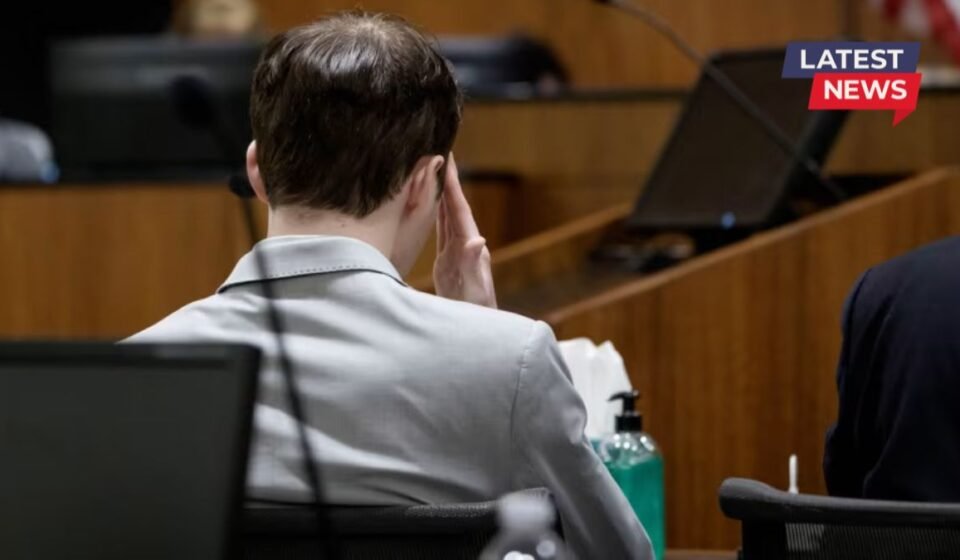
In a tense, emotionally charged courtroom in Provo, Utah, the public received its most intimate and disturbing look yet into the aftermath of the assassination of conservative commentator Charlie Kirk. During a high-stakes preliminary hearing at the Fourth District Courthouse, prosecutors unveiled a mountain of digital and forensic evidence against 23-year-old Tyler James Robinson, the man accused of fatally shooting the Turning Point USA co-founder in September 2025.
Among the most damning pieces of evidence introduced was a recorded interview with Robinson’s former roommate and romantic partner, Lance Twiggs. Played aloud for the court, the video captured a chilling but vulnerable moment: a tearful, private confession in a quiet apartment more than 200 miles away from the crime scene, where a panicked Robinson reportedly admitted to the killing and whispered that he “wishes he hadn’t done it.”
The revelation provided a stark contrast to the calculated, cold precision of the rooftop sniper attack that took Kirk’s life. For the family of Charlie Kirk, including his widow Erika and mother Kathryn, the hearing was an agonizing reckoning. They sat closely together in the gallery, weeping and comforting one another as the court reviewed graphic details, security footage, and the raw words of the man accused of altering their lives forever.
The Video Interview and the Post-Attack Panic
The centerpiece of the prosecution’s day in court focused heavily on the testimony and prior statements of Lance Twiggs. Twiggs, who has cooperated fully with law enforcement under a grant of immunity, painted a picture of a young man rapidly unraveling in the hours following the assassination.
According to the recorded interview played by prosecutors, Robinson returned to the southern Utah apartment he shared with Twiggs the day after the shooting. The air in the apartment was thick with tension; the two had already exchanged highly incriminating text messages the night before.
Twiggs described Robinson’s behavior as erratic and hyperactive, noting that the defendant “kept going around and just doing stuff… to keep himself busy,” seemingly trying to outrun the reality of what he had done. In the video, Twiggs recalled Robinson pacing the apartment, cleaning, and frantically trying to figure out his next move before ultimately deciding he would have to face his parents or turn himself over to the police.
A Trail of Ink and Encrypted Messages
State Bureau of Investigation Agent Brian Davis took the stand to break down the exhaustive digital breadcrumb trail Robinson left behind. The evidence suggested that while Robinson may have expressed immediate regret to his partner, the attack itself was born out of a simmering ideological hostility.
Prosecutors presented a handwritten note Robinson had left for Twiggs on the morning of the shooting. The note, read in its entirety for the first time in court, laid bare a deliberate intent.
In the immediate aftermath of the shooting, Robinson’s text messages to Twiggs shifted from political justification to raw panic over operational errors. In one exchange, Robinson openly fretted about having left his rifle—a weapon belonging to his grandfather—behind at the scene. He expressed a desperate hope that if he could somehow retrieve the rifle “unseen,” he would leave “no evidence.”
When it became clear that escaping undetected was impossible, Robinson’s texts took on a bizarrely casual, detached tone. He complained to Twiggs about how “annoying” it would be to navigate the logistics of the aftermath and still make it back to work. “Needless to say imma be late coming home, my b,” he wrote, utilizing shorthand for “my bad.” He later admitted in the thread that he had originally “hoped to keep this secret till I died of old age.”
As the net tightened, Robinson essentially broadcast his actions to a broader circle. Barely an hour before surrendering to law enforcement, he logged onto the Discord messaging platform and sent a message to a public chat room stating bluntly, “it was me at UVU yesterday.”
The Fatal Day at Utah Valley University
To establish probable cause, the prosecution meticulously reconstructed the events of September 10, 2025. Charlie Kirk, 31, was visiting the Utah Valley University campus in Orem to host an outdoor debate planned by Turning Point USA. The event had drawn an energetic crowd of roughly 3,000 students, supporters, and political opponents.
According to affidavits and surveillance footage, Robinson arrived on campus early that morning in a gray Dodge Challenger. He was caught on camera changing clothes and moving through a pedestrian tunnel before making his way into the Losee Center. Slipping past a public walkway railing, he gained access to the building’s roof.
From a stomach-down sniper position approximately 142 yards away, Robinson waited. At 12:11 p.m., Kirk took the microphone and began speaking to the roaring crowd. Just twelve minutes later, a single bullet shattered the campus air, striking Kirk directly in the neck. Witnesses recalled the horrifying speed of the event; Kirk collapsed instantly into the arms of his staff as chaos erupted across the courtyard. He was rushed to Timpanogos Regional Hospital but was pronounced dead shortly thereafter.
The investigation took a dark turn when authorities recovered the ammunition left behind near the rooftop sniper pad. The court was shown photographs of bullet cartridges meticulously engraved with custom text using a power tool. The inscriptions included taunts such as “Hey Facist! CATCH!” and “If you Read This, You Are GAY.” When these images appeared on the courtroom monitors, observers noted that Robinson, sitting at the defense table, briefly furrowed his brow and smirked, while his mother sat behind him buried in her hands, weeping.
Political Motives and the Battle Over Evidence
The state is aggressively pursuing the death penalty against Robinson, charging him with aggravated murder alongside six additional counts, including witness tampering for instructing Twiggs to delete their text history. Prosecutors are seeking a specific sentence enhancement, arguing that Robinson deliberately targeted Kirk due to his high-profile conservative political views.
Testimony from Robinson’s mother indicated that the young man had grown intensely political and deeply progressive over the prior year, with a heavy focus on transgender and LGBTQ+ rights. Ironically, Twiggs testified that while Robinson occasionally grumbled about Donald Trump or news heard on the radio, he had never explicitly mentioned Charlie Kirk prior to the day of the assassination.
Meanwhile, defense attorney Michael Burt spent the latter half of the week working to chip away at the state’s forensic foundation. Burt zeroed in on the ballistics and DNA evidence, cross-examining experts on the absolute certainty of their findings. He highlighted an analysis by the Bureau of Alcohol, Tobacco, Firearms and Explosives (ATF) regarding a bullet fragment taken from Kirk’s body, pointing out that the match to the grandfather’s rifle was technically labeled “inconclusive” due to the fragmented nature of the metal.
The defense also raised questions regarding potential DNA transfer on the recovered weapon. However, the prosecution maintained that the combination of physical evidence, rooftop surveillance video, the recovered weapon, and Robinson’s multi-platform confessions creates an “overwhelming” case that easily meets the standard to head to a full trial.
Fourth District Judge Tony Graf concluded the grueling week by scheduling final oral arguments for September 1, 2026, at which point he will formally rule on whether the state has met the threshold to push the capital murder case forward to a jury. For a nation still grappling with the shock of the assassination, the proceedings offer a grim reminder of how quickly political polarization can cross the line into irreversible tragedy.