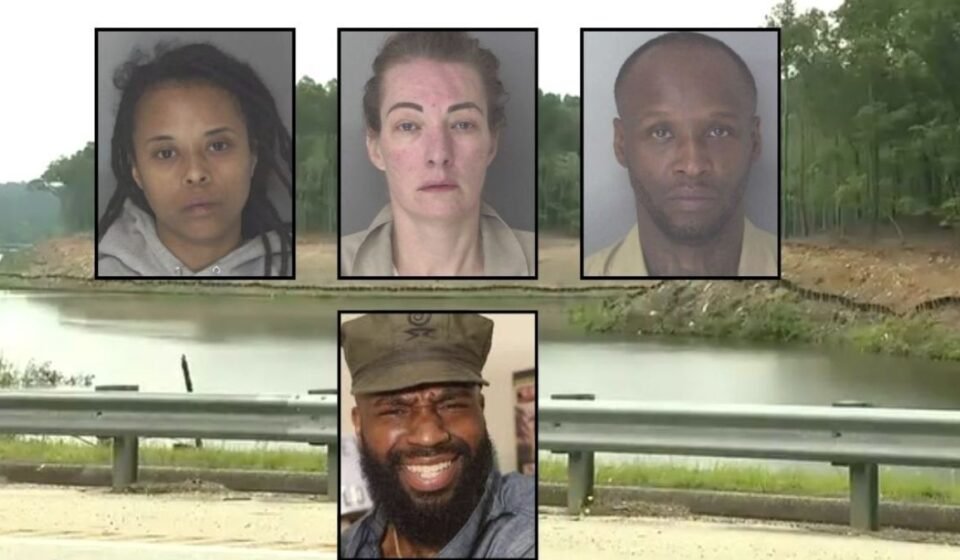
Girlfriend of man found mutilated in a reservoir might have a very good reason for lying about his killer: Police

The discovery was as macabre as it was sudden. On May 15, a warm spring morning in Douglas County, Georgia, authorities pulled the severely dismembered and mutilated remains of a man from the calm waters of the Dog River Reservoir. For weeks, the body had no name. Investigators released digital sketches of distinct tattoos found on the skin, hoping someone in the metro Atlanta area would recognize them.
The breakthrough came when a woman who used to date the victim saw the news broadcast, recognized the artwork, and contacted the grieving family. Through subsequent DNA testing conducted by the Georgia Bureau of Investigation, the remains were positively identified as 37-year-old Jamal Rashad Parker. Parker was a familiar face in Atlanta’s social scenes—a vibrant, widely loved bartender, talented artist, and budding entrepreneur.
The identification quickly shifted a missing person mystery into a high-stakes homicide investigation. Initial warrants led to the dramatic, four-day search of an upscale home in a quiet community on Langdale Chase. Inside, forensic teams recovered a reciprocating saw, heavy cleaning supplies, and masking air fresheners, concluding that Parker had been killed and dismembered inside the residence before his remains were scattered in the reservoir.
By mid-June, two primary suspects were arrested and hit with malice murder charges: Brittany Amber Baker and Mario Andre Barber. Alongside murder, the duo faced a laundry list of charges involving massive identity fraud, forgery, drug distribution, and possession of false identification cards. But the true twist in the case emerged weeks later in July, when police locked handcuffs on a third suspect: 35-year-old Ambria Sadia Symone Boyd.
Boyd, who had been in a relationship with Parker, didn’t just stay quiet; she actively fed law enforcement a complex web of misinformation. Charged with murder, obstruction of law enforcement, and making false statements, detectives now believe that the girlfriend of the mutilated bartender may have had a very compelling, self-serving reason to lie about the identity of his killers.
The Anatomy of a Calculated Deception
When the horrific details of Parker’s death first hit the local airwaves, the community was stunned by the sheer ruthlessness of the act. Parker’s father, Charles Parker, openly wept outside the courthouse, telling local journalists that the killers displayed a terrifying lack of remorse, executing a crime that felt more like a Hollywood horror movie than reality. Because of the severe mutilation, the family could not even hold a traditional open-casket funeral to say their final goodbyes.
As detectives tried to piece together Parker’s final hours, they naturally interviewed those closest to him, including Ambria Boyd. According to newly unsealed arrest warrants, Boyd was confirmed to have been physically with Parker just a few hours before investigators believe the murder took place. Yet, when questioned about his disappearance and potential enemies, her narrative took a highly specific, diversionary turn.
Boyd allegedly spun a tale involving an anonymous tipster. She claimed to investigators that a mysterious, unnamed caller had contacted her out of the blue, providing a random suspect’s name and address associated with Parker’s disappearance. She dutifully passed this “lead” along to the Douglas County Sheriff’s Office, effectively sending detectives down a wild goose chase.
It was a classic counter-investigative play: provide just enough specific, actionable details to appear cooperative while ensuring the spotlight remains firmly pointed away from the actual house where the crime occurred. For weeks, the misdirection worked, allowing the primary actors time to attempt to scrub the crime scene clean with heavy chemical agents.
Co-Conspirator or Captive Audience?
The core question driving the prosecution now centers on why Boyd chose to shield the individuals responsible for slaughtering her partner. According to the criminal warrants, the reason wasn’t random fear of the unknown—it was an intimately close, intertwined living situation.
Investigators discovered that Boyd was not an detached outside acquaintance to the initial suspects. She was a close personal friend of the primary suspects and had actively been staying at the very upscale Langdale Chase home where the murder and dismemberment are believed to have taken place. This revelation completely flipped the context of her false statements. She wasn’t an innocent girlfriend repeating a strange call she received; she was operating from inside the belly of the beast.
Legally, this deep level of proximity gives police a very clear-cut motive for her deception. If Boyd was present in the home, or deeply involved in the extensive identity theft and forgery ring that Baker and Barber were running out of the residence, she had everything to lose. Revealing the truth about Parker’s death would inherently mean pulling the pin on a massive criminal grenade that would take her down along with them.
In the eyes of the law, her lies weren’t just a byproduct of panic; they were a deliberate effort to hinder a murder investigation to protect a criminal enterprise and keep herself out of prison. By concocting the story of the phantom phone call, she attempted to satisfy the police’s demands for information while keeping her housemates, and her own freedom, safe.
The Weight of the Charges
Under Georgia law, when an individual acts in concert with others to cover up a felony, or possesses prior knowledge and actively participates in the deception, the legal shield evaporates. The Douglas County Sheriff’s Office applied identical malice murder language to Boyd’s warrants as they did to Baker and Barber. The state alleges that she acted “in concert with and as a party of a crime,” making her legally just as responsible for the termination of Jamal Parker’s life as the individuals who physically held the tools.
The scale of the operation uncovered during the four-day raid suggests that this was far from a simple domestic dispute gone wrong. The sheer volume of identity fraud, fake IDs, and financial forgery equipment indicated a highly sophisticated white-collar ring operating parallel to violent, cartel-like enforcement tactics. How Parker entangled himself with this crew, or what spark caused the relationship to turn so deadly, remains a closely guarded secret by Douglas County major crimes detectives.
For the Parker family, the arrest of the third suspect brings a bitter, complicated form of closure. The realization that someone who claimed to care for Jamal was allegedly sleeping under the same roof as his killers—and actively crafting stories to protect them—has added a layer of profound betrayal to an already unbearable tragedy.
All three suspects—Brittany Amber Baker, Mario Andre Barber, and Ambria Sadia Symone Boyd—are currently being held in the Douglas County Jail without the possibility of bond. As the judicial process grinds forward, the web of lies that took weeks to build continues to completely unravel under the weight of forensic DNA and digital footprints.