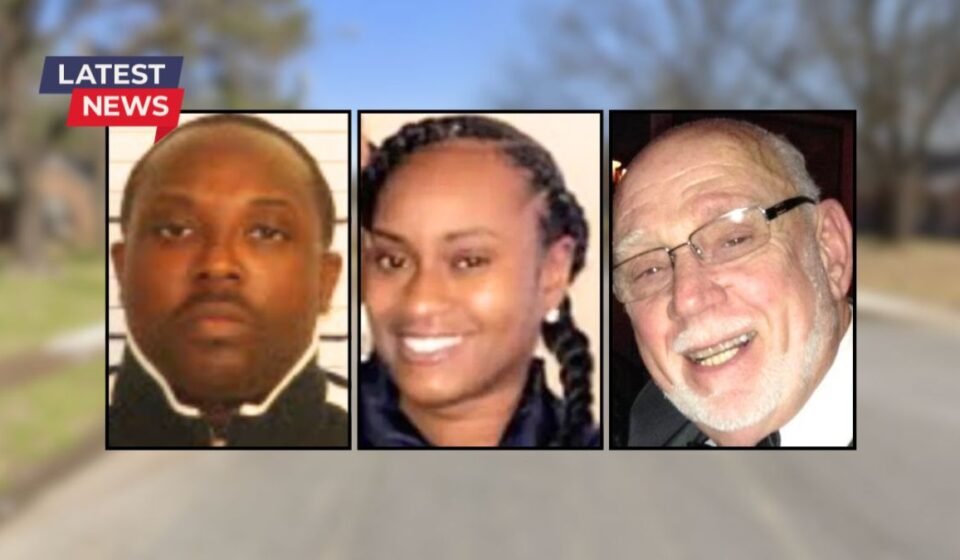
80-year-old Lyft driver picks up man without realizing the passenger just killed a woman and was about to shoot him dead

The intersection of technology and gig-economy ridesharing has revolutionized daily transportation, but it has also occasionally opened the door to deeply unpredictable and chilling encounters. Among the most harrowing of these incidents is the tragic case of Joshua Gossett, whose violent spree on October 30, 2022, culminated in a double homicide that shocked Shelby County, Tennessee. At the center of this tragedy was Richard Skelskey, a hardworking 80-year-old Lyft driver who accepted a routine ride request, entirely unaware that his passenger had just executed a woman minutes prior—and that he was driving toward his own final moments.
Following a highly publicized trial, a Shelby County jury convicted Gossett on multiple counts of first-degree murder, resulting in a sweeping 150-year prison sentence. The details of the case expose a terrifying sequence of events, a flawless digital manhunt, and a sobering look at the vulnerabilities faced by rideshare drivers every single day.
The First Crime: The Murder of Shunish Baggett
The nightmare began in a quiet neighborhood within Shelby County, Tennessee. On the evening of October 30, 2022, Joshua Gossett utilized the Lyft smartphone application to secure transportation directly to the residence of Shunish Baggett. The relationship between Gossett and Baggett, alongside the exact underlying motive for his hostility, became central focuses for investigators tracking his movements that night.
Upon arriving at Baggett’s home, Gossett’s intentions immediately turned lethal. According to forensic evidence and subsequent trial testimony presented by Chief Prosecutor Carrie Bush and Assistant District Attorney JD Hamblen, Gossett confronted Baggett and shot her dead inside her own home. The sudden and brutal nature of the attack left Baggett with no chance of survival. With one life violently taken, Gossett did not flee on foot or hide in the immediate vicinity; instead, he casually reached back into his pocket, pulled out his phone, and opened the Lyft app once again to summon a getaway vehicle.
A Fatal Algorithmic Match: Enter Richard Skelskey
Miles away, 80-year-old Richard Skelskey was navigating the streets, picking up fares as he frequently did. For many older adults, rideshare driving offers a dual sense of purpose: a way to supplement income and an opportunity to remain active and converse with members of the community. Skelskey was known as a dependable and pleasant driver, someone who treated his vehicle as a professional workspace and his passengers with inherent respect.
When the notification chimed on Skelskey’s dashboard, it looked like any other ride. The algorithm matched him with a user waiting just a short distance away—at the very address where Shunish Baggett’s body lay cold.
Skelskey pulled up to the curb, shifted into park, and waited. Within moments, Joshua Gossett walked out of the house, opened the door, and slid into the passenger seat. To any observer, and certainly to Skelskey, it was an entirely mundane interaction. There were no flashing sirens, no signs of a struggle visible from the street, and no indicators that the young man sitting in the back or passenger seat had just committed first-degree murder.
Minutes of Hidden Danger: The Ride Toward Tragedy
As the vehicle pulled away from the curb, a profoundly unsettling dynamic was in motion. Skelskey was engaging in standard driver protocol, likely adjusting the climate control, checking his GPS route, or offering a polite greeting to his fare. He had absolutely no realization that he was locked inside a moving target with an active, armed killer.
During the trial, prosecutors highlighted the terrifying disparity between Skelskey’s total innocence and Gossett’s cold calculation. Gossett was not looking for a simple ride home or an escape out of state; he was seeking an immediate means of upgrading his getaway logistics. The firearm used to end Baggett’s life was still in Gossett’s possession, concealed but entirely ready for deployment.
As the drive progressed, Gossett made his final, horrific move. Without warning or provocation, he raised his handgun and shot the 80-year-old driver directly in the head. The impact was instantly fatal, giving Skelskey no opportunity to defend himself, pull over safely, or escape. After shooting the elderly man, Gossett took control of the vehicle, callously removing Skelskey, stealing the car, and driving away from the second crime scene of the night.
The Digital Footprint: How Investigators Caught a Killer
The evasion tactic was short-lived, primarily because Gossett fundamentally underestimated the sheer volume of data generated by modern rideshare platforms. The Shelby County Sheriff’s Office and local detectives quickly launched a massive investigation as soon as the bodies of Baggett and Skelskey were discovered.
A standard investigation might have taken weeks of interviewing localized witnesses, but the digital trail left behind by the suspect provided an immediate roadmap for law enforcement. Investigators subpoenaed records from Lyft, mapping out the exact accounts utilized to request the rides that evening. The coordinates perfectly synced:
- The first ride placed Gossett at the scene of Shunish Baggett’s murder.
- The second ride request originated from Baggett’s address immediately following her death, matching Skelskey’s vehicle to the location.
- GPS telemetry tracked the precise route Skelskey’s vehicle traveled up until the moment his phone and vehicle tracking went offline or shifted patterns, pinpointing the location of the carjacking.
In addition to the bulletproof digital footprint, prosecutors accumulated an overwhelming mountain of physical and visual evidence. Over the course of the trial, the state presented testimony from 15 distinct witnesses, including forensic analysts, tech cell-tower experts, and responding officers. They introduced 57 physical exhibits, alongside extensive neighborhood surveillance footage that captured the vehicle’s arrivals and departures.
Perhaps the most damning piece of evidence, however, came from the defendant himself. Following his apprehension, Gossett sat in an interrogation room and provided a recorded statement to police. This recording, which spanned approximately six hours, featured Gossett detailing his actions, mapping out his timeline, and effectively cementing his own legal fate.
Justice Served: A 150-Year Sentence
The trial reached its emotional peak in April, when a Shelby County jury reviewed the dense collection of electronic evidence and returned unanimous guilty verdicts on all counts. Gossett was convicted of two counts of First-Degree Murder, alongside severe firearm and carjacking charges related to the double homicide.
The final chapter of this legal battle concluded before Judge Carolyn Wade Blackett. Prior to the formal announcement of the penalty, the court opened the floor to victim impact statements. Members of both Shunish Baggett’s and Richard Skelskey’s families stepped forward, delivering agonizing accounts of the void left behind by Gossett’s unprovoked cruelty. They described Baggett as a vibrant woman taken in the sanctuary of her home, and Skelskey as a gentle, hardworking grandfather whose willingness to provide a service ultimately cost him his life.
Recognizing the absolute lack of remorse and the extreme danger Gossett posed to society, Judge Blackett handed down a sentence of 150 years in the Tennessee Department of Correction. Given the length of the term, the sentence ensures that Gossett will spend the remainder of his natural life behind bars, completely stripped of the freedom he stole from two innocent citizens.
The Ongoing Vulnerability of Rideshare Drivers
While the conviction of Joshua Gossett brought structural closure to the legal system, it simultaneously re-ignited a national conversation regarding the safety protocols embedded within app-based ridesharing. Drivers across the country frequently voice concerns that they are left highly vulnerable by design.
Unlike traditional taxi cabs, which often feature bulletproof partition glass, prominent security cameras, and centralized company dispatches, rideshare drivers operate personal civilian vehicles. They pick up completely anonymous passengers based entirely on a digital profile that can occasionally be falsified, compromised, or created using prepaid gift cards.
The tragic final ride of Richard Skelskey remains a stark reminder of the hidden dangers lurking behind a simple smartphone notification. It underscores an urgent reality: behind every automated match, a human being is sitting behind the wheel, entirely dependent on the safety and integrity of the person stepping into the back seat.