‘They must have spread the fire after I lit it’: Woman set blaze that killed 2 and then blamed the victims during jailhouse phone call

On November 28, 2023, emergency dispatchers in Grant County, New Mexico, received a frantic 911 call reporting a structural fire at 600 W. Lincoln Street in the village of Santa Clara. The response from local emergency services was immediate. Fire crews from Santa Clara, Hurley, Fort Bayard, and Whiskey Creek raced to the scene, but by the time they arrived, the residence was completely engulfed in raging flames. Thick, black smoke billowed into the winter sky, and the intense heat generated by the blaze created a barrier that entirely prevented firefighters from executing any immediate rescue operations inside the home.
For hours, crews battled the aggressive fire, working to suppress the flames and prevent the destruction from spreading to neighboring properties. When the blaze was finally extinguished and the smoldering ruins cooled enough to allow emergency personnel to step inside, a horrific scene awaited them. In the debris of the home, search teams discovered the remains of two elderly women. The victims were identified as 78-year-old Mary Lou Maynes and 60-year-old Sara Maes. Maynes, who suffered from severe health complications, was reliant on supplemental medical oxygen—a factor that severely limited her mobility and significantly accelerated the volatility of the fire once it caught.
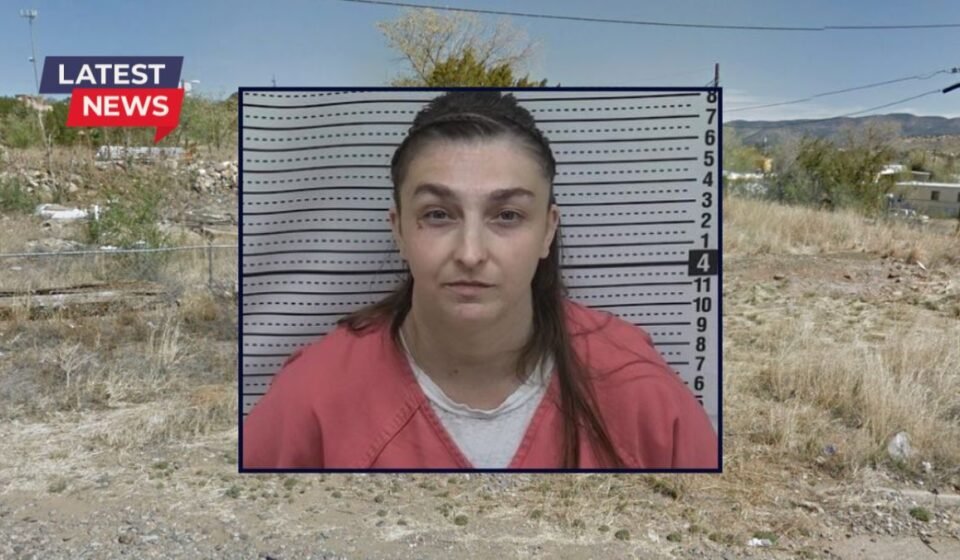
What initially began as a tragic emergency response quickly shifted into a double-homicide investigation. State fire marshals and local detectives quickly noted irregularities in the burn patterns and the progression of the fire. The physical evidence pointed toward arson. It became apparent that the fire had not been an unfortunate accident caused by faulty wiring or a heating mishap, but a deliberate act. The investigation rapidly focused on 36-year-old Cassandra Brazeal, a woman known to the victims, who had been in the vicinity of the home shortly before the disaster began.
The Investigation and Arrest
As the Grant County Sheriff’s Office worked alongside arson investigators, the timeline of November 28 began to paint a disturbing picture of Brazeal’s movements. Witnesses and electronic data placed her at the scene exactly when the fire was ignited. The vulnerability of the victims added a layer of malicious intent to the crime. Maynes and Maes had virtually no chance of escaping an accelerated structure fire, a reality the perpetrator would have undoubtedly known.
On December 5, 2023, just one week after the fatal fire, officers from the Village of Santa Clara Police Department located Brazeal. She was taken into custody on an outstanding arrest warrant unrelated to the arson, but was immediately routed to the Grant County Sheriff’s Office for intensive interrogation regarding the Lincoln Street homicides. Following her initial questioning, she was booked into the Grant County Detention Center, where she was held without bond as prosecutors prepared formal charges.
While the circumstantial and forensic evidence compiled by detectives was substantial, it was an unexpected breakthrough within the walls of the jail that solidified the state’s case against her.
‘They Must Have Spread the Fire After I Lit It’
The turning point in the prosecution’s case occurred during Cassandra Brazeal’s stay at the Grant County Detention Center. Like most correctional facilities, jailhouse phone calls are routinely monitored and recorded for security purposes—a fact explicitly stated to inmates before they dial out. Despite these warnings, Brazeal engaged in a phone call with an unidentified external contact that would ultimately seal her legal fate.
During the recorded conversation, Brazeal discussed the night of the fire, making statements that stunned the detention officers monitoring the call. In a series of statements that balanced admission with severe deflection, Brazeal was overheard saying, “I didn’t mean to kill them.”
Almost immediately after uttering what amounted to a confession of her presence and involvement, Brazeal attempted to pivot the blame onto the deceased victims.
The audio recording of the phone call provided prosecutors with a crucial piece of evidence. In a single conversation, Brazeal admitted to lighting the fire while simultaneously attempting to construct a bizarre, highly implausible defense: that two vulnerable women—one of whom was dependent on an oxygen tank—somehow took her initial fire and intentionally spread it throughout their own home to cause their own deaths.
This jailhouse admission completely shattered any potential defense strategy of total innocence. It established clear intent to commit arson, leaving the prosecution with absolute proof that Brazeal was the source of the fatal blaze.
Court Proceedings and Legal Resolution
Faced with the undeniable weight of her own recorded statements, the forensic findings of the fire marshals, and the threat of a life sentence if convicted of first-degree murder at trial, Brazeal and her defense council chose to negotiate a plea agreement with the state.
The case was brought before Sixth Judicial District Judge Foy. Under the terms of the negotiated plea, Brazeal pled guilty to two counts of second-degree murder, which are classified as second-degree felonies resulting in the death of a human being under New Mexico law. Additionally, she pled guilty to one count of aggravated arson, also a second-degree felony.
On July 2, 2026, Sixth Judicial District Attorney Norman R. Wheeler announced the formal conclusion of the case. During the sentencing hearing, the prosecution emphasized the cruelty of the act, pointing out that Brazeal left two helpless individuals to perish in an inferno of her own making, only to later disparage their memory during her jailhouse phone call.
Judge Foy opted for strict sentencing measures, ordering that the statutory maximum penalties for each individual count be served consecutively rather than concurrently. The breakdown of the sentence was structured as follows:
- Fifteen years imprisonment for the second-degree murder of Mary Lou Maynes.
- Fifteen years imprisonment for the second-degree murder of Sara Maes.
- Nine years imprisonment for the count of aggravated arson.
This culminated in a total sentence of 39 years in a state correctional facility.
Aftermath and Justice Served
Because the court formally classified Brazeal’s crimes as serious violent offenses, strict guidelines dictate her eventual release eligibility. Under New Mexico state statutory provisions, individuals convicted of serious violent offenses must serve a mandatory minimum of 85% of their total court-imposed sentence before becoming eligible for parole or early release due to good behavior.
As a result, Brazeal is legally required to spend at least 33 years behind bars before she can ever be considered for release. The court did grant her credit for the time she had already served while awaiting the final disposition of her case, which amounted to two years, six months, and 26 days of time served in the Grant County Detention Center.
The resolution of the case brought a sense of closure to the village of Santa Clara and the families of Mary Lou Maynes and Sara Maes. The case remains a textbook example of how critical electronic surveillance and internal security protocols within detention facilities can alter the course of a criminal prosecution, turning a defensive denial into an ironclad conviction.
For more context on how forensic investigators piece together complex arson cases like the one on Lincoln Street, you can watch this NFPA video overview on the dynamics of fire behavior, which breaks down the science of how rapidly fires expand within residential structures.