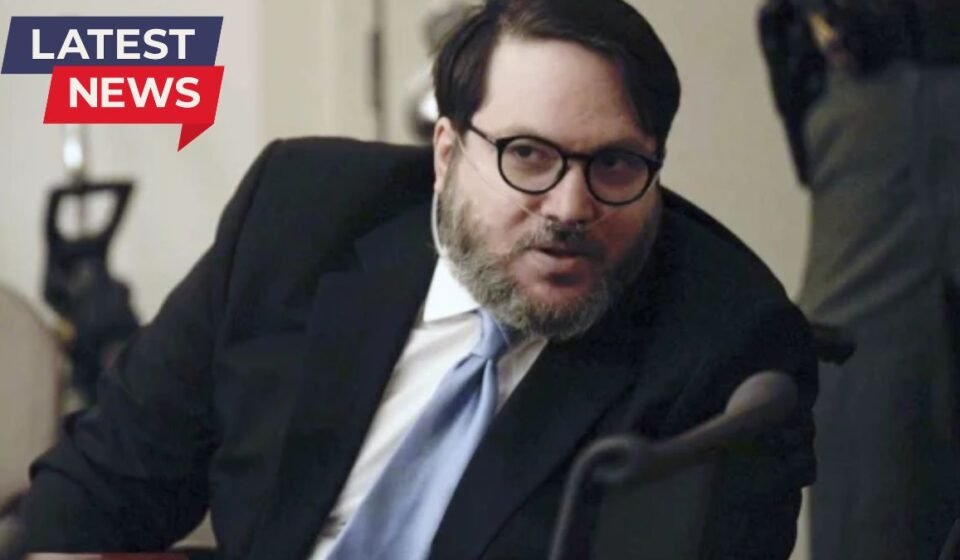
Nicholas Rossi, Accused of Faking Death and Fleeing US to Scotland After Rape Charges, Has Died

The death of Nicholas Rossi has brought an end to one of the most unusual international criminal cases in recent years. Rossi, an American fugitive who gained worldwide attention after allegedly faking his own death to avoid prosecution in the United States, died after spending years fighting extradition from Scotland.
His case attracted global headlines due to its extraordinary twists, including claims of mistaken identity, dramatic courtroom appearances, and allegations that he had staged his own death before secretly relocating overseas. Authorities in the United States had accused Rossi of fleeing the country to escape serious criminal charges, including rape allegations, while he repeatedly denied being the man sought by investigators.
Who Was Nicholas Rossi?
Nicholas Rossi, who was also known by several aliases including Nicholas Brown and Arthur Knight, became one of America’s most high-profile fugitives after authorities alleged he fled the country while facing criminal investigations.
Originally from Rhode Island, Rossi had previously faced multiple legal issues in the United States. Law enforcement agencies accused him of leaving America after learning that he was wanted in connection with a rape investigation in Utah. Separate civil lawsuits and allegations involving abuse and fraud had also been linked to him over the years.
Despite these allegations, Rossi consistently denied wrongdoing and maintained that authorities had mistaken him for someone else.
Allegations of Faking His Own Death
The case became internationally famous after reports surfaced that Rossi had allegedly staged his own death.
In 2020, news circulated claiming that Rossi had died from late-stage non-Hodgkin lymphoma. According to investigators, this announcement convinced many people that he was no longer alive.
However, authorities later claimed the death story was fabricated.
Months later, Scottish hospital staff treating a seriously ill COVID-19 patient reportedly became suspicious after fingerprint checks and other evidence suggested the man was actually Nicholas Rossi.
The discovery stunned investigators and sparked an international legal battle over his identity.
Arrest in Scotland
Scottish authorities arrested Rossi in Glasgow while he was receiving medical treatment.
Following his arrest, he insisted his real name was Arthur Knight, an Irish orphan who had never lived in the United States.
He repeatedly denied being Nicholas Rossi and claimed he was the victim of an elaborate conspiracy involving American authorities.
The identity dispute dominated court proceedings for months, with Rossi maintaining that officials had kidnapped, tortured, and falsely accused him.
However, prosecutors presented fingerprint evidence, photographs, tattoos, DNA comparisons, and witness testimony that they said conclusively identified him as Nicholas Rossi.
Lengthy Extradition Battle
Rossi fought extradition to the United States through numerous legal appeals in Scottish courts.
His legal team argued that he should not be sent back because of concerns over his health and alleged human rights issues.
Court hearings frequently attracted widespread media attention because of Rossi’s dramatic claims and unusual courtroom behavior.
At various hearings, he appeared using a wheelchair and oxygen equipment while continuing to deny his identity.
Scottish judges ultimately rejected his arguments and ruled that the evidence overwhelmingly established that Arthur Knight and Nicholas Rossi were the same person.
The courts approved his extradition to the United States to face rape charges in Utah.
Return to the United States
After exhausting most of his legal options, Rossi was extradited from Scotland and returned to the United States.
American authorities transferred him to Utah, where prosecutors prepared to move forward with criminal proceedings connected to the rape allegations.
Rossi pleaded not guilty to the charges.
Because criminal cases require proof beyond a reasonable doubt, the allegations against him remained unproven in court at the time of his death. His death means the criminal prosecution will not proceed to a final verdict.
Reports of His Death
Authorities have confirmed that Nicholas Rossi has died while in U.S. custody.
Officials have not publicly released extensive details regarding the exact cause of death, although Rossi had long claimed to suffer from multiple serious medical conditions.
His health had frequently been cited during extradition hearings, where defense lawyers argued that returning him to the United States would place him at significant medical risk.
The official circumstances surrounding his death are expected to be documented through standard investigative procedures conducted after deaths in custody.
A Case That Drew Worldwide Attention
Few extradition cases have generated as much international attention as that of Nicholas Rossi.
His alleged fake death, multiple identities, courtroom denials, and years-long legal battle transformed what began as a criminal investigation into an extraordinary international legal saga.
Legal experts often pointed to the case as an example of how international cooperation between law enforcement agencies can overcome attempts by fugitives to evade justice across national borders.
The proceedings also highlighted the complexity of extradition law, particularly when defendants challenge both their identity and the legality of being transferred between countries.
Legal Impact of Rossi’s Death
With Rossi’s death, the criminal rape case against him is expected to be formally dismissed because criminal prosecutions generally cannot continue after a defendant dies.
However, his death does not determine guilt or innocence regarding the allegations he faced. Since no criminal trial reached a verdict, the accusations remain legally unresolved.
Civil matters, if any remain pending, may be handled separately depending on applicable state laws and the status of individual claims.
Conclusion
Nicholas Rossi’s story remains one of the most extraordinary fugitive cases in recent memory. Allegedly faking his own death, adopting a new identity in Scotland, denying his identity in court for years, and ultimately being extradited to the United States created an international legal drama unlike most criminal cases.
His death closes a chapter that spanned multiple countries, numerous court hearings, and years of legal disputes. While the criminal charges against him will never be decided in court, the case continues to be remembered for its remarkable sequence of events and the unprecedented efforts by authorities to identify, locate, and extradite one of America’s most closely watched fugitives.